

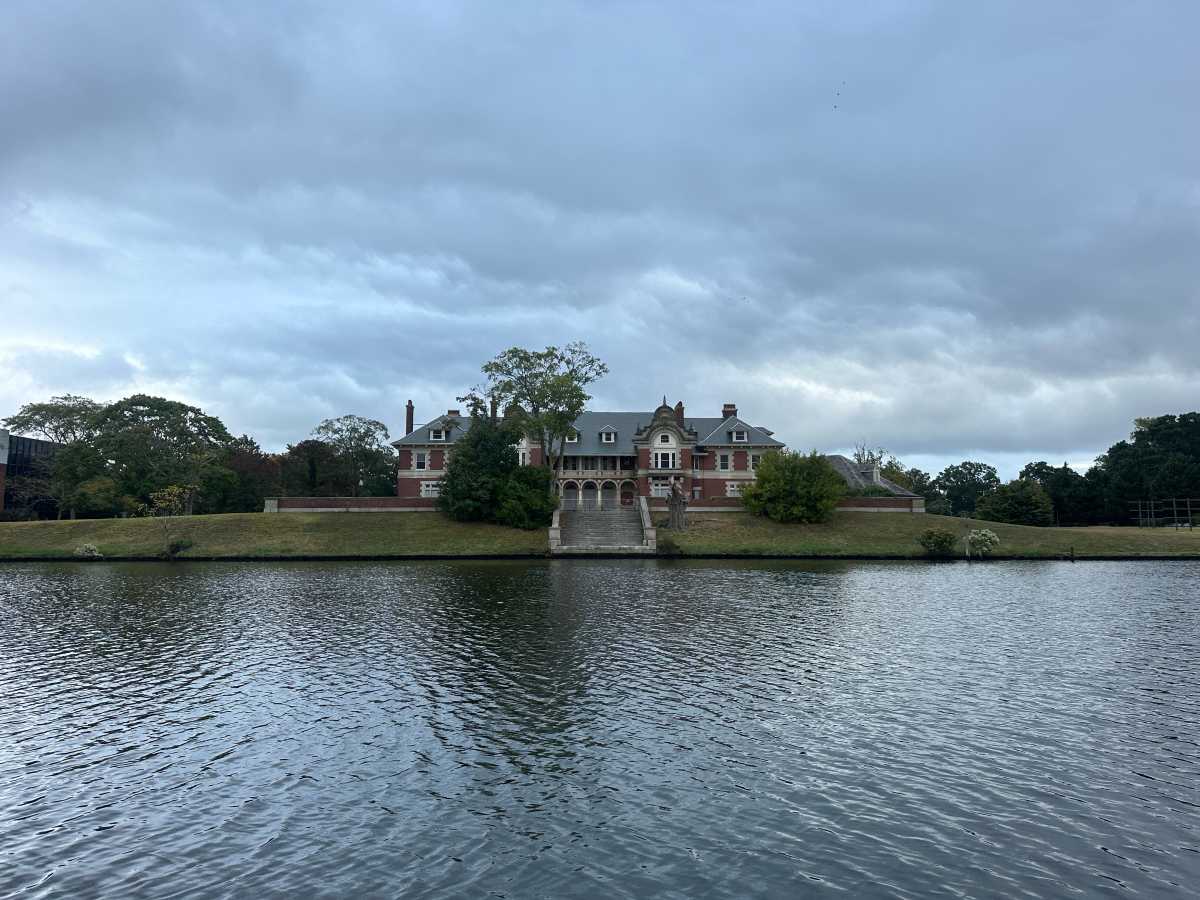
Over the past decade, the once-proud and elegant Dowling College campus in Oakdale has had its share of trials and tribulations, including trespassers and vandals after the institution closed in 2016. Even its brief use as a Suffolk County Police Department training ground could not keep trouble away. Now the embattled Idle Hour campus is on the market again.
A listing by Tigar Reality Group reads:
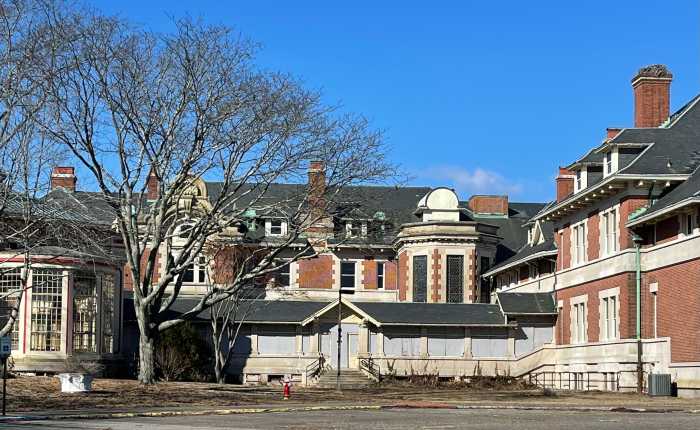
“Encompassing eight buildings with a combined 239,000 square feet on a 25-acre waterfront tract of land, it includes a 110- room mansion [Idle Hour Mansion] (45,000 square feet) with a 24k gold leaf ballroom, and an oak paneled library. Suffolk County’s $174 billion GDP and 1.5 million population provide a robust market for hospitality, residential, and institutional uses. All bids have to be submitted by June 30th.”
This listing represents the remaining relics of Dowling, the so-called “personal college.”
Representing one of the largest bankruptcies among not-for-profit schools in the country, the Oakdale Dowling campus, purchased by Beijing-based asset group Mercury International, has remained underutilized and neglected since 2016.
“The property has a lot of memories; there were hopes of resurrecting the property as a school,” stated former Dowling professor Dr. Elsa Sofia Morote in an interview with Fire Island & Great South Bay News. “The overall closing of Dowling affects the alumni. It is not only the loss of a college, but it is the loss of your pride in your alma mater. It also has graduates questioning the prestige of their degree because the school no longer exists.”
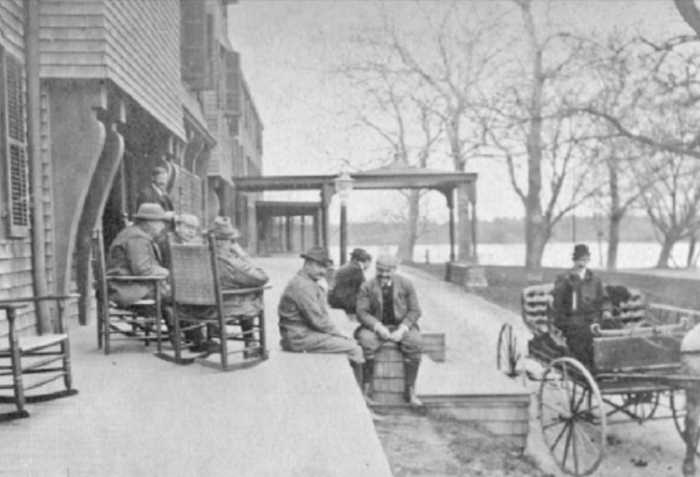
Another effect the campus had on the community was that it served as a historical landmark, representing the area’s evolution from Gilded Age excess to modern-day suburbia. Originally part of William K. Vanderbilt’s 900-acre Idle Hour estate, the Beaux-Arts-style mansion comprised 110 rooms.
“I am cautiously optimistic. We all want the best for the property and the community. Time will tell,” said Maryann Almes of the Oakdale Historical Society, who also spoke with our publication.
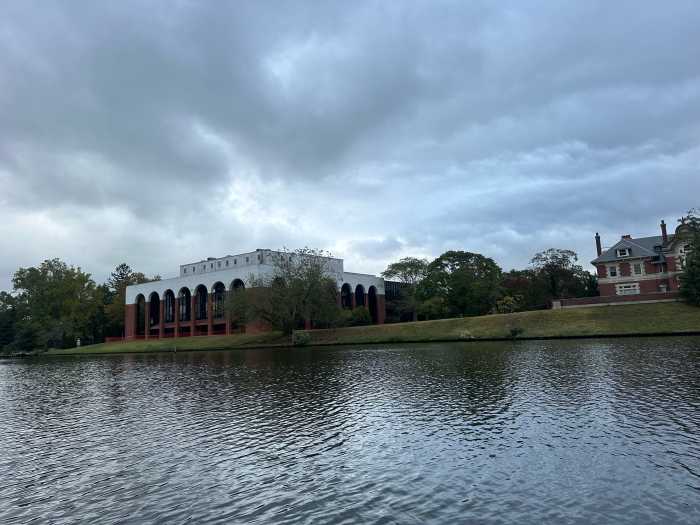
The initial listing described the Idle Hour Mansion as listed on the Historical Registry and eligible for tax breaks to “benefit a rehabilitation.” To support this claim, multiple media outlets falsely reported that the mansion was listed on the National Register of Historic Places in 1979. However, the mansion and the multiple buildings on the property are not on the National Register but only on the New York Historical Registry.
In response to the listing and registry reporting, Almes explained:
“I feel they got the National Historical Registry mixed up with the New York Historical Registry. In the 1970s, New York State conducted a historical inventory of its buildings, which detailed the building’s historical significance, the materials used in its construction, and the architect, but it carries no weight except as an inventory. We probably have 70 buildings on this list in Oakdale alone. The National Historical Registry allows you to get tax breaks, and efforts were made to list the mansion on the registry when Mercury purchased the property. We presented this idea to them and explained that they could get tax breaks, but they never did. Before closing, Dowling was encouraged by their librarians to apply for the registry, and they refused as well.”
“What we were able to put on the building was a Planned Landmark Preservation district (PLP), which is a zoning district within the town of Islip for protection. Believe it or not, this can carry more weight than a National Historical Registration, because it can’t be torn down. A National registration indicates that it is registered, but a PLP is a town ordinance that prohibits exterior modifications. Local PLPs include the Artist Community, Sagtikos Manor, Power House, which is Dowling’s former performing arts building, and the Idle Hour Mansion. However, a PLP has no tax benefits, and has to be honored despite the sun- setting of the educational zoning with the closing of Dowling.”
The property’s current zoning allows it to be retrofitted for residential use.
In a prior interview with Architect Victor Famulari, known for his work modifying parts of the Marjorie Post estate into classrooms for Long Island University, he stated there is “100%” potential to both maintain historical preservation ordinances and create new residential space.
“You keep the exterior and windows intact without a doubt and minimize interior modifications by accommodating the existing functions,” Famulari said. “All projects take on a pulse of their own, but maintaining the beauty of the building and the comfort or meaning it provides to the community is the priority when balancing the redevelopment of a historic structure.”
“She [Idle Hour Mansion] has gone through many changes,” stated Almes. “A cult compound, National Dairy headquarters, a hotel, and a college; she is a survivor. Whatever it becomes, it is going to have to be something that works for today’s world.”