

It is said that “rejection is merely a redirection of one’s destiny.” Over 50 years ago, Charles Modica embodied this mantra.
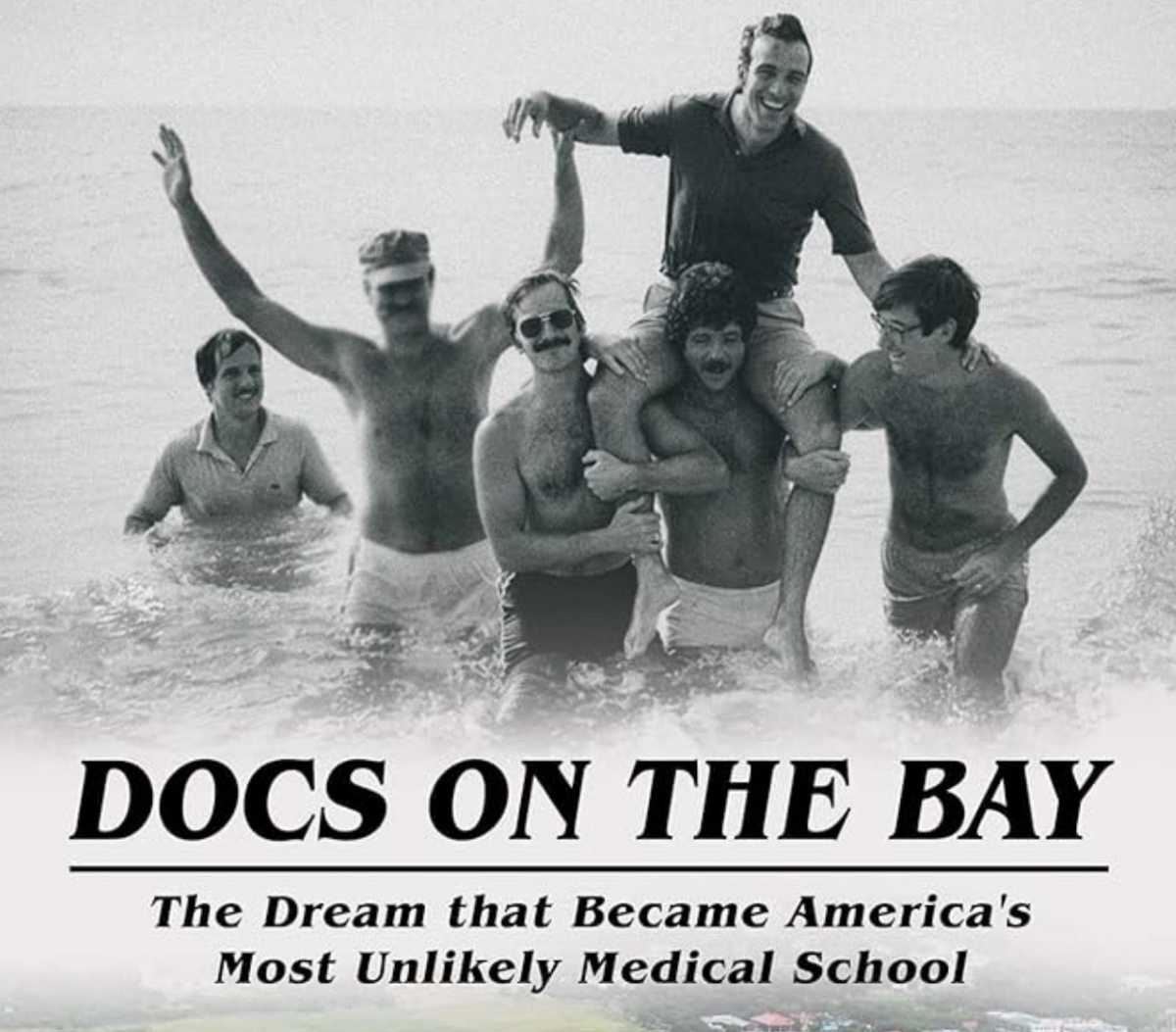
In the book he recently authored with David Fisher, Docs on the Bay: The Dream that Became America’s Most Unlikely Medical School (Post Hill Press), Modica details his ‘60s-era anti-establishment spirit in creating a world-class medical school in Grenada while navigating everything from extreme natural disasters to a United States Marine intervention to put down a governmental coup.
However, the most compelling part is the medical school’s origins and its unlikely start.
After applying to and being rejected by 20 American medical schools, Modica faced the sobering reality that the current system was not producing enough doctors for the United States.
“We [Baby Boomers] did not recognize what we were up against when attending college and professional schools because the population increased after World War II, but the number of medical school seats did not. This is why Baby Boomers were squeezed. Many of us went abroad to study medicine, and that was the only other option. No one was expanding enrollment. It felt like an unfair system,” explained Charles Modica in an interview with Fire Island News.
In a final effort, Charles applied to and was admitted to a medical school in Spain, but, like his 28 peers from the United States, he struggled to become fluent in Spanish while meeting academic demands. These challenges led to 16% of his class flunking out. After completing his first year, Modica decided to drop out and attend law school. “I had the time to think about this and get angry about it,” Modica stated.
His solution? Create his own medical school.
“I came across Grenada’s independence in the Wilmington Evening Journal’s The World Today section, and it was a pivotal moment. To obtain a medical school charter, I needed an independent nation recognized by the World Health Organization, a member of the United Nations, English-speaking, and one that would qualify students to take the Commission on Foreign Medical Graduates exam upon their return to the United States. I wrote to Jamaica and Trinidad, but they are the core of the University of the West Indies.”
Grenada, meeting all these requirements, motivated Modica to send a telegram from the newly formed Foreign Medical School Information Center [Modica’s newly formed company] that read:
“The Foreign Medical School Information Center wishes to congratulate the nation of Grenada on its recent independence from the United Kingdom. I am pleased to inform you that as a newly independent nation you are eligible for inclusion in our ongoing feasibility study for a new American medical school. Since the study is ongoing, you must respond within the next 30 days to be considered.”
Within a week, the telegram in response would affirm the soon-to-be life’s work of Modica.
Gloria Payne, a Grenadian diplomat, sent a reply telegram stating, “The nation of Grenada wishes to be included in this study. Please let us know what next steps we must take.”
“My father’s first impression was, ‘What do you mean, a new medical school?’ He said, ‘Son, I have two words for you: You’re crazy.’ But my mother thought it was a great idea. I sent my dad and his two business partners down there [Grenada] to negotiate the charter because I was young—26 at the time—and I did not want them to see me. On July 23, 1976, we were granted an official charter.”
However, obtaining the charter was only the beginning. His success in creating adaptable solutions to every problem his school faced, given its location on a small island, stemmed from his family’s work ethic and the life lessons he learned from his multiple successful Fire Island-based businesses in both the real estate and hospitality sectors.
His entrepreneurial success, coupled with these problem-solving skills, would change the lives of the students the school produced and improve the quality of life for the entire island nation of Grenada.
Today that school is known as St. George’s University, and it maintains its connections to Long Island with administrative offices in Great River.
This book is a testament to the fact that every problem has a solution, but Charles’ tenacity was not the only force behind building the school. Idealism was the driving force that transformed an island of just over 100,000 people, known to the world as a nutmeg producer, into a place that graduates the most doctors in the Caribbean.