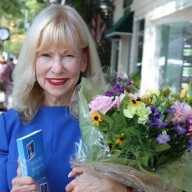


Before Fire Island, on one hazy 1960s summer, at a Girl Scout Camp on Long Island, a young Meryl Meisler hears whispers of a mystical realm just across the bay. On this island, they say, “fairies ran about naked and lived in little houses with charming names like Shirley’s Temple.” This opening vignette — shared by a now-renowned, longtime photographer of queer New York nightlife — sets the tone for John Dempsey’s ambitious account of Fire Island’s art history.
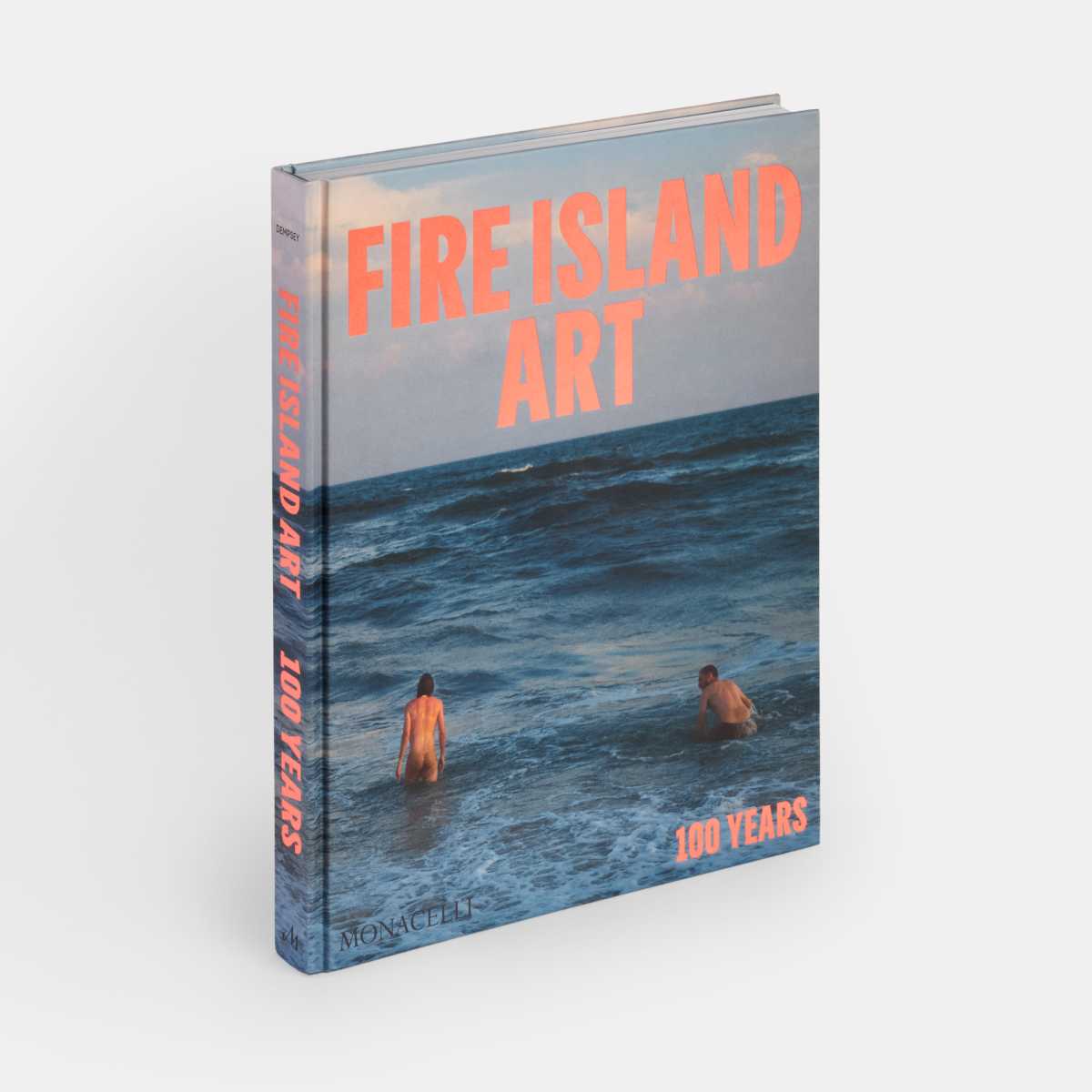
Fire Island Art: 100 Years, edited by Dempsey, who is also the president of the Fire Island Pines Historical Society, and released on April 1 by Monacelli Press, draws on archival materials, some never before published. The book brings together interviews with artists Lola Flash, Pamela Sneed, and Wolfgang Tillmans, as well as essays by Sam Ashby, AA Bronson, Michael Bullock, Andrew Durbin, Ksenia M. Soboleva, and others.
This coffee table book is strikingly vibrant and curiously cohesive. The tome makes no pretense of obscuring its silences. But amid the throng of larger-than-life stars and colorful characters, the island’s specters speak with surprising authority.
A prolonged period of mourning eclipsed Fire Island in the wake of the AIDS epidemic. Creative output and carefree revelry dropped off, as John Dempsey writes in his introduction, “the island’s most notable artists had either passed away or could not bring themselves to return to a place that felt haunted.”
In a later chapter, artist and designer Sam Ashby adds, “For a while, seemingly nothing was made on the island, except the occasional news report marking it as a site of contagion.” It’s no wonder the once-vibrant sliver of sand felt haunted, as many note, gay men came to the Pines and Cherry Grove in the 80s and early 90s to die.
In the early 2000s, artists began to bring the island’s creative spirit back to life. The Fire Island Artist Residency (FIAR) was founded in 2011, followed by BOFFO’s residency with K8 Hardy in 2012. Over the years, the inconceivable absence that swept the island has remained an unwavering presence in its visual and literary culture.
Most glaringly absent from Fire Island today are, well, anyone who falls below the uber-wealthy on the economic ladder. Cherry Grove and the Pines — and, as emerges repeatedly in the book, Oakleyville — are known as creative havens; yet aside from those lucky enough to secure a spot in Cherry Grove and the Pines’ respective artist residencies, FIAR and BOFFO, it is nearly impossible for artists who are not independently wealthy to spend any significant period of time living and creating on Fire Island.
Writer and documentary filmmaker Michael Bullock notes the tension between “resort and refuge” that characterizes the sandbar — at its best, a refuge from a homophobic world; but to some, an exclusive vacation spot where only the whitest, wealthiest, best-dressed, or undressed, cis gay men feel at home.
The few lesbian artists of Fire Island whose work is documented or known — cleverly relegated to a chapter titled, “Why Have There Been No Great Lesbian Artists in Cherry Grove?” written by Ksenia M. Soboleva — emerge, perhaps unsurprisingly, as caretakers and material archivists of the island.
In 2012, K8 Hardy created Lesbian Processing on Beach, a performance in which she wore a sign bearing the title “JockStrap Collector” as she walked along the shore. She later created a dress from the discarded garments.
A few years later, Leilah Babirye was selected for a FIAR residency; she flew from her home country of Uganda to JFK, and came straight to Cherry Grove.
“I thought Cherry Grove was America,” she recalls. Her time in Cherry Grove culminated in a public installation titled Door Fantasy, centered around a decorated mirror installed in the Ice Palace, paying tribute to the many drag queens who have performed there.
There is hardly any documentation of lesbian artistic output before this period. What we’re left with is mostly speculation. So Soboleva lets her mind wander:
“[Patricia] Highsmith did date a more established artist at one point: Allela Cornell, a painter who in 1946 committed suicide by drinking nitric acid after experiencing heartbreak. Did they ever come out to Cherry Grove together? Would it be enough for me to just imagine they did? Agnes Martin was friends with Carson McCullers and Ed Baynard, both of whom frequented Fire Island. Did she ever join them? I can only dream of what a Cherry Grove sunset by Martin would look like.”
The most alluring voids in Fire Island’s artistic history are the fleeting instances of sheer kismet and inexplicable alchemy that defy documentation. This sentiment echoes across Dempsey’s collected texts: “Its greatest moments were presumably left unphotographed, unpainted, out of the range of the surviving record,” Durbin notes.
Paul Thek had attempted to articulate this elusive beauty decades prior in a letter to Susan Sontag: “mostly the quiet and the rhythm (brilliant red and brilliant yellow hidden behind blue, or vice versa) are hovering somewhere else,” he writes wistfully of long, languid Oakeyville days.
Yet as Fire Island’s fraught history — from police raids and AIDS to surging real estate prices and dune erosion — shows, this enigmatic peace is fluid but not unbreakable, and to forget that is to neglect both our queer ancestors and descendants.
“The island’s enduring popularity suggests it still holds a special magic that can’t be found anywhere else — something fragile, resilient, and worth protecting,” Dempsey writes. “Our duty is to preserve it.”