

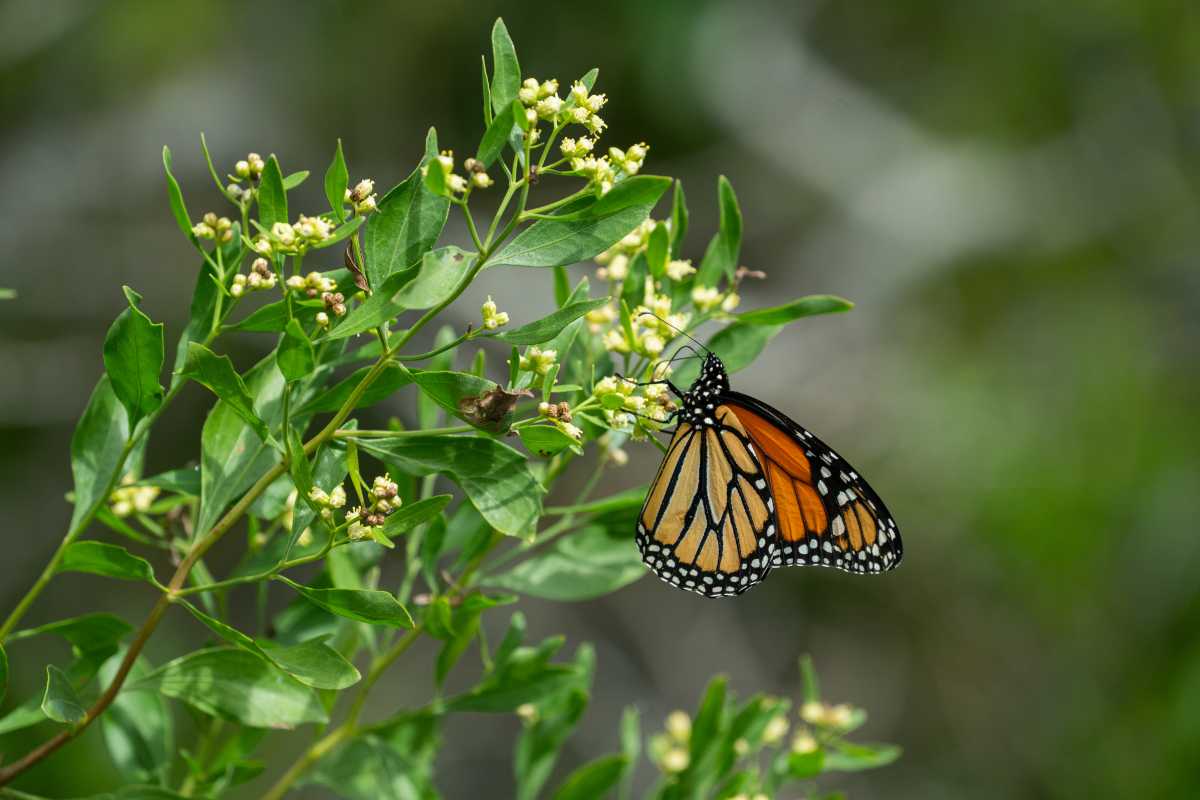
Just because summer is coming to a close does not mean you should leave the beach. The annual Monarch butterfly migration is the prime time to witness on Fire Island throughout the month of October. Stop by the shore and gaze at hundreds, if not thousands, of butterflies resting, feeding, and fluttering in the ocean breeze.
Monarchs flock to milkweed plants throughout the island to lay their eggs, according to the Fire Island National Seashore’s webpage. The caterpillars eventually feed on leaves, which provide the nutrients they need to grow. Milkweed also makes Monarch butterflies poisonous prey for other wildlife.
Localization of Heart Poisons in the Monarch Butterfly, by Brower and Glazier, states that these plants contain “cardiac glycosides,” which are dangerous to animals like birds. In fact, Viceroy butterflies also have bright orange and black wings like the Monarch to signal to predators that they are a poisonous snack, as stated by Save Our Monarchs Foundation. When two species resemble each other’s ecological warning signals, it is called Mullerian Mimicry.
According to the Farmer’s Almanac, during the approximately 3,000-mile fall migration across the border, we see the fourth generation of butterflies from their residency in Canada, because they only live about two to six weeks.
The U.S. Forest Service (USFS) reports that Monarch butterflies use the microclimate within Oyamel Fir trees in Mexico to protect themselves from winter conditions. The trees provide a space that ranges from 32 to 59 degrees Fahrenheit and a moist environment that prevents the butterflies from drying out. USFS notes that when temperatures are lower, the monarchs will use the fat reserves they build from nectar to keep their bodily functions going.
Once temperatures rise, they will begin their migration back north while laying eggs.
If you want to see the Monarch migration this fall, you should also consider your role in saving the population. In 2024, the U.S. Fish and Wildlife Service proposed that Monarch butterflies be protected under the Endangered Species Act due to their rapid population decline over the last 20 years. (Save the monarch | U.S. Fish & Wildlife Service).
You, too, can help preserve this phenomenal migration on Fire Island for future generations
You can do a few things to help save the Monarch butterfly population. First, plant a butterfly garden with local milkweed in the genus Asclepias at your home. This includes Common, Butterfly, and Swamp Milkweed. The Long Island Monarch Alliance recommends planting them or placing their pots in a sunny area with a windbreak so they can rest. Once you plant milkweed, you might attract other butterfly visitors, such as the painted lady, American lady, Aphrodite fritillary, or Canadian tiger swallowtail.
Where do you get milkweed? I did the research for you using the Xerces Society for Invertebrate Conservation’s virtual Native Seed Finder. You can support small businesses at the same time by purchasing from the Long Island Native Plant Initiative and Blossom Meadow Farm.
Secondly, you can avoid using insecticides in your butterfly garden. According to The Effects of Insecticides on Butterflies: A Comprehensive Review by Verma et al., insecticides have been linked to “reduced homing and hunting skills, late maturation, fewer offspring and higher mortality…especially in the case of highly sensitive or traveling species such as Danaus plexippus (the monarch butterfly).”
Third, you can also donate to nonprofits that support Monarch conservation. Some examples include Save the Monarchs Foundation, the Monarch Joint Venture, and the Monarch Sanctuary Project.
![“Unfortunately, and despite our warnings and advice to leave [Fire Island] while conditions allowed, many decided not only to stay but to come over to the island,” scolded Ocean Beach Mayor James Mallott in an emailed newsletter on the afternoon of Sept. 26, during the height of the nor’easter. “These decisions put themselves and their families in danger and jeopardized our first responders who had to answer calls that never should have been.”](https://www.fireislandnews.com/wp-content/uploads/2026/09/IMG_8692.jpeg?quality=51&w=700)