

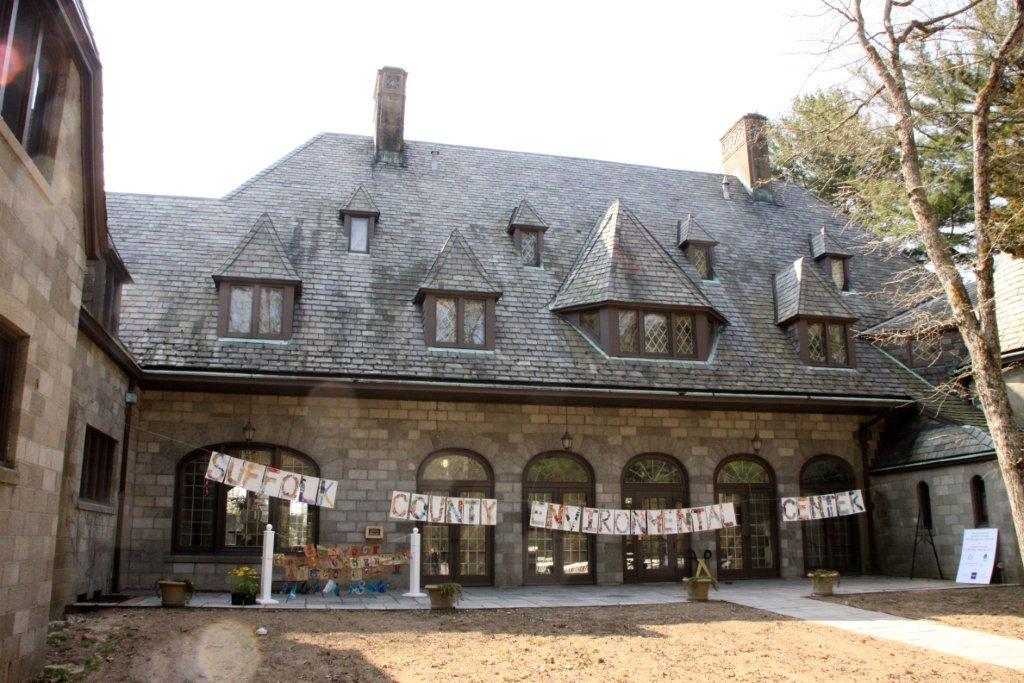
Seatuck Environmental Association will begin transitioning out of the home it has occupied for the past 20 years. The conservation group announced on June 15, 2026, that it will end its stewardship role at the Scully Estate on South Bay Avenue in Islip. The organization plans to fully vacate the property by the end of October 2026, marking the end of two decades of storied success at Suffolk County’s environmental center.
“The move is driven by a strategic decision to focus our efforts and resources on Seatuck’s continued growth as a regional conservation leader and to increase our impact as Long Island’s wildlife champion,” the group stated in a press release. With the property now operating as a nature center under Seatuck’s stewardship, the group believes stepping away from its management will allow it to expand its efforts to protect Long Island’s environment and wildlife. “Going forward, Seatuck’s conservation efforts and educational programming will continue without interruption, and our commitment to conserving Long Island wildlife will remain unwavering,” Seatuck said.
The Scully Estate-Seatuck partnership was intertwined long before the creation of the 501(c)(3) nonprofit organization. Charles D. Webster founded Seatuck, which was officially incorporated in 1989. Before that, Webster and many New York conservationists worked together through the Seatuck Research Program (SRP), Seatuck’s first unofficial name. The program was created in 1979, after the death of Webster’s wife, Natalie Peters. After inheriting 200 acres in the Islip area from her parents, Peters donated the property to the federal government in 1969. The land was subsequently preserved as a nature sanctuary and designated a National Wildlife Refuge. The SRP conducted a range of environmental research and projects on birds, deer, raccoons, Lyme disease, and salt marshes. Over time, it evolved into the Seatuck we know today, with a mission centered on environmental conservation and education.
In 2007, Seatuck moved into the Scully Estate to help establish it as a nature center in partnership with Suffolk County. Now, here is where the linkage appears before the move. The 200 acres of the original Seatuck that Peters donated and the 70 acres of the Scully Estate were known as the Windholme Farm. It was owned by Samuel and Adaline Peters. They divided the property along South Bay Avenue, which ran right through it, and gave the sections to their two children. Lousine Peters, who took over the 70 acres of what is now the Scully Estate, left the property to her daughter Hathaway, who took the last name Scully through marriage. Hathaway donated the property with the wish that it be used as a nature center.
Hathaway’s first cousin was Natalie Peters Webster, who, as mentioned earlier, received the neighboring 200 acres that originally belonged to Lousine Peters’ brother, Harry Peters.
Both properties received their donation wishes for a nature center. SRP helped establish the Seatuck property and after Suffolk County purchased the Scully Estate in 2004, the modern-day Seatuck Environmental Association established it. Under its stewardship, Seatuck has become a trusted guardian of the property and has built the beautiful gem of an environmental center in the heart of South Shore Long Island. The property is home to an abundance of wildlife, and the public has access to get a prime look at nature on Long Island.
By leaving the Scully Estate, Seatuck is withdrawing from a long, interlocked fate of destiny that perhaps nature knew was needed.
As of now, there is no word on what will happen to the property once Seatuck fully withdraws, but it is safe to assume it will remain operational in a similar way. “Because the property was acquired with open space funding and is dedicated to the Suffolk County Historic Trust, we’re confident it will remain a nature preserve and open as a public service,” Seatuck stated. As for new locations, the association will operate from the South Shore Nature Center on Bayview Avenue in East Islip. Additionally, this past March, Seatuck took over a new lease for a building at the West Sayville Boat Basin. With new offices, a wet lab, and a hatchery, work will be based there as well. It is being called their Coastal Restoration and Innovation Center.
While it is sad to see Seatuck leave the Scully Estate, when one door closes, another opens. If the work they do for Long Island’s environment continues to grow, it will be worth it.