

For Chris St. John (aka Christopher McGuire), Fire Island has loomed large throughout the life of the singer-songwriter, from his early years to the present.
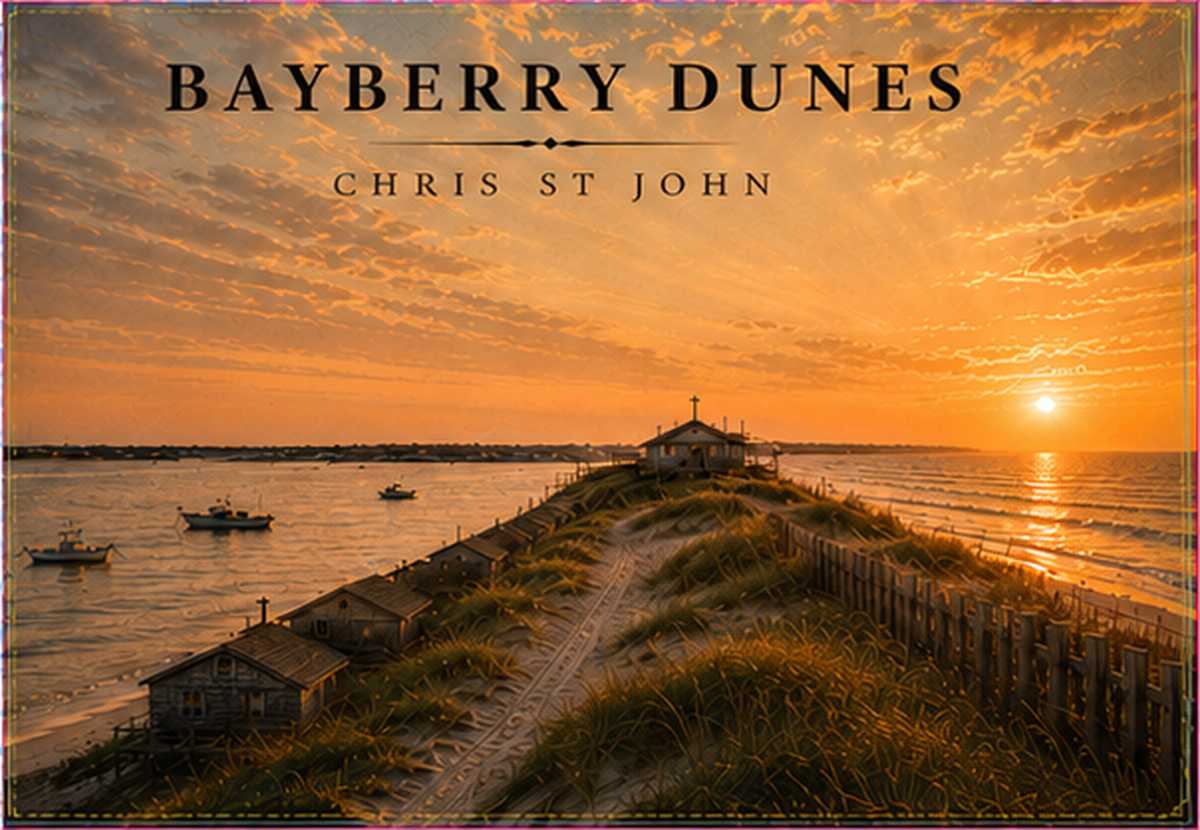
This enchanted isle has been influential enough to lend some history to St. John’s latest outing, the recently released Bayberry Dunes. Both the EP and its title track are a nod to a small Fire Island waterfront community just east of Watch Hill, which became a local historical footnote when it was a casualty of the successful opposition to Robert Moses’s proposal to extend Ocean Parkway across the island.
The solution came through federal intervention and the creation of Fire Island National Seashore. While this effort preserved much of Fire Island, the homeowners of Bayberry Dunes were not protected by the community exclusions, and their properties were acquired through eminent domain. It’s a narrative St. John heard as a teenager when he started working summers on Fire Island.
“I started working at Watch Hill when I was 14, and that was 1980,” St. John recalled. “The stories were fresh enough to be flying fast and furiously. I heard them from the park rangers, concessionaires, maintenance workers, and people who came back from the mainland who lived in Bayberry Dunes and would come and talk to young people about what they had lost. The saving of Fire Island, preventing Robert Moses from putting a roadway down, was glorious. Losing Bayberry Dunes was sad. He would have destroyed Fire Island.”
While St. John was born in Central Islip, he and his family moved to Bayport when he was four years old. During those early teen years, the call of Fire Island beckoned him, and he landed his first job after pestering a late local legend for employment.
“I remember asking my dad if he could call Marty Gunkle to see if I could get a job at his concession stand,” St. John explained. Gunkle was a longtime operator on the Watch Hill marina and restaurant in the 1980s and 90s.
“My father said no and told me to get on my bike and ask him myself. I went over and kept going back and forth. Marty loved to tell this story about asking his wife, Marian, what he was going to do about this kid who kept coming over, a 14-year-old looking for a job. She said, ‘You’re going to hire him.’ He was stuck with me and became one of my best friends.”
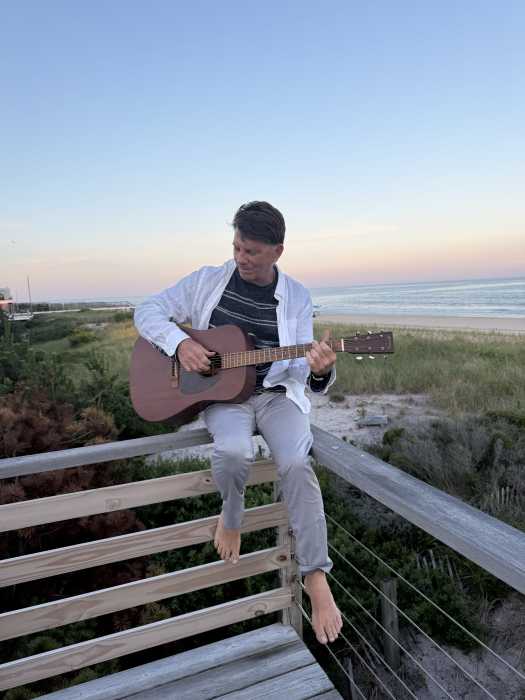
The other side of St. John was his passion for music, which began when he was 4 years old. Exposure to the Fab Four turned him into a certified Beatles fanatic. “They turned me onto music. My room was full of Beatles paraphernalia,” he said. Around the time St. John started working at Fire Island, he got his first guitar and began setting to music the lyrics he’d been writing for a few years.
“I used to take my guitar with me when I worked at Watch Hill,” he said. “After work, I’d take my guitar, walk over to the dunes by the ocean, sit there all by myself, and play. I was too nervous to play in front of anyone for a while. Even as I started to get better, I kept looking for perfection, so I was afraid to play in front of other people. That’s about where I got my start.”
While St. John’s path led him to a career in law, both as a practicing attorney and as a former elected judge, the twin passions of music and Fire Island have always been omnipresent. While the latter was represented by his marriage near the Bayberry Dunes and eventually owning a home in Kismet, St. John’s love of music deepened as he discovered additional influences, including The Grateful Dead, Jackson Browne, James Taylor, and Fleetwood Mac. That passion evolved from listening to creating, eventually leading to the release of his 2021 full-length debut, I’m Dreaming.
When St. John isn’t busy running the Health and Learning for Orphans Missions (HALO), a nonprofit he co-founded in 2015 with a musician friend that provides medical care, education, and surgeries to impoverished communities and AIDS orphans in Africa, Central America, and the Caribbean, he carves out time to make music. As a lifelong traveler, it’s no surprise that he recorded his latest EP in Nashville, New York City, and England. As someone who prefers the studio to the stage, St. John admits that songwriting has become cathartic for him.
“If I didn’t have an outlet to get my feelings out and to do the things I do, I’d need to see a shrink,” he said. “My guitar is my psychologist and knows me better than anybody. It’s a way of expression and a way to get stuff out.”
But if you want to get to St. John’s happy place, know that it’s the large outer barrier island in the center that runs parallel to the South Shore of Long Island.
“I spent a lot of formative years over there,” St. John said. “I went through high school and college, and even in law school I spent a summer over there as a bartender, filling in and helping out my friend. That’s a lot of girlfriends—a lot of broken relationships and a lot of growing up that I did in the middle of paradise. I couldn’t have asked for a better way to have been brought up than those summers on Fire Island.”