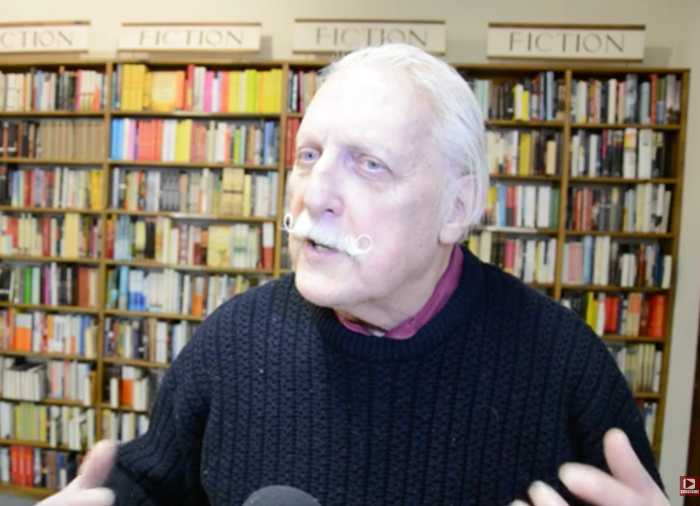


Sixty-four years ago, in spring 1962, as a reporter in Suffolk County, I was working on my first big story—a plan to build a four-lane highway on Fire Island conceived by Robert Moses.
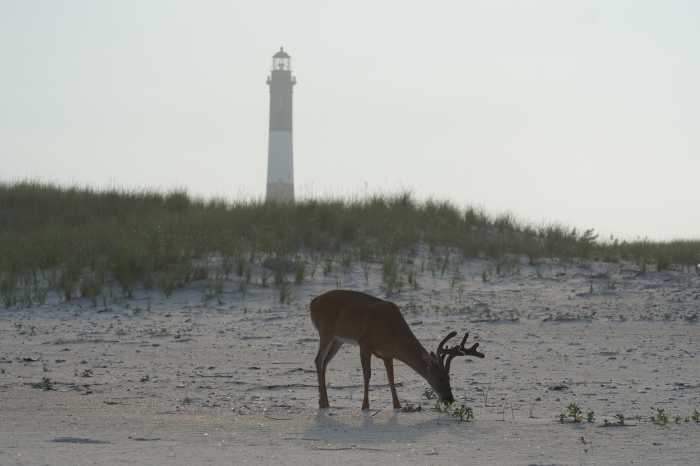
It would have devastated much of the exquisite nature of that barrier beach, along with its 17 very special communities. I was 20 years old. After two years of grassroots opposition and journalism, in which I played a significant part, the highway scheme was stopped. In September 1964, President Lyndon B. Johnson signed legislation establishing Fire Island National Seashore (FINS) to preserve Fire Island.
In those two years, I merged investigative reporting with environmental journalism, a combination that has been a journalistic and academic focus of mine for the next six decades. As a professor at SUNY Old Westbury for 47 years, I taught courses titled Investigative Reporting and Environmental Journalism.
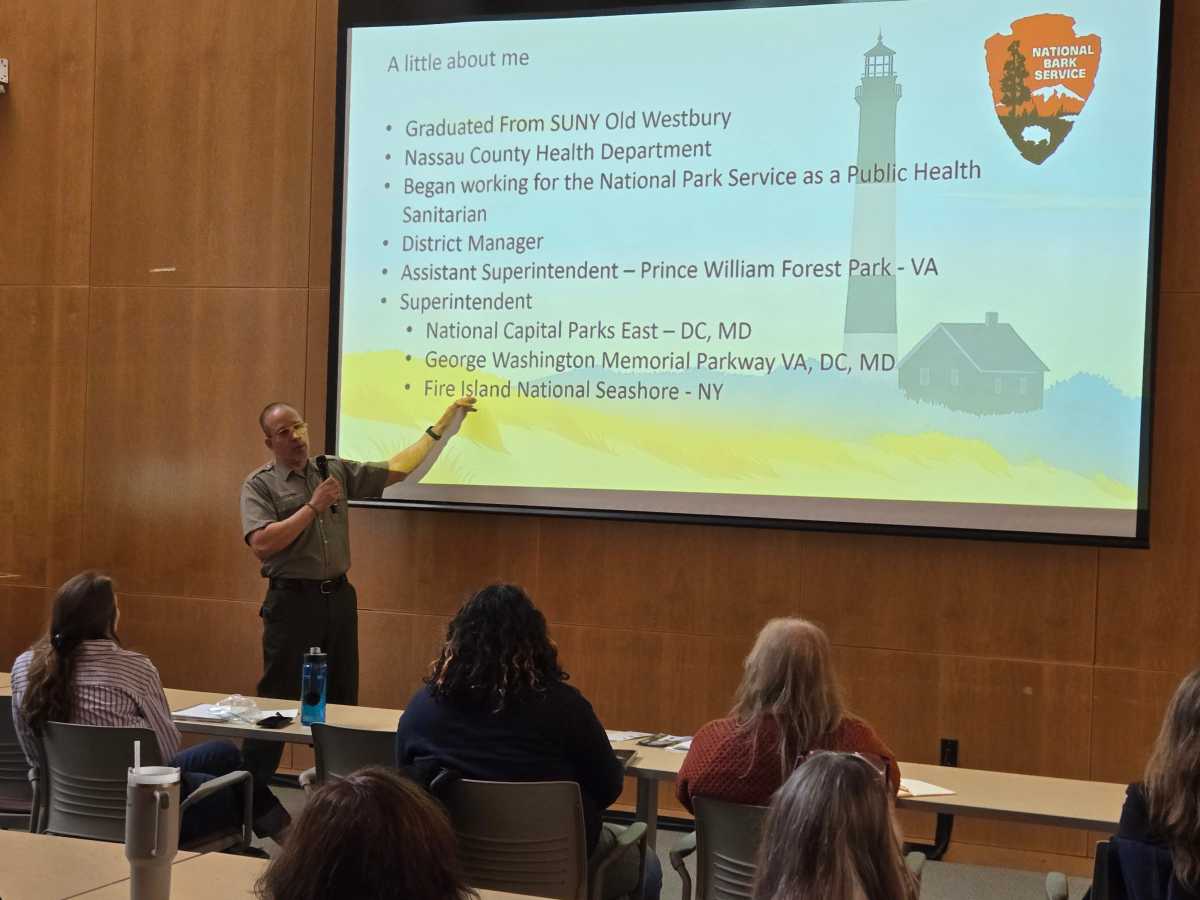
Life has its circles, and I was delighted that Alexcy Romero, superintendent of the FINS and a 1990 graduate of SUNY Old Westbury, was a guest speaker at the school on Earth Day last month.
“I did not know how I was going to apply my Environmental Science degree,” said Romero during his talk at the university.
He has found a highly positive application for it at the National Park Service (NPS) for more than three decades now. Romero has been the superintendent of FINS since 2018. He talked about how “everything we do is about protecting resources and providing a good, memorable visitor experience.”
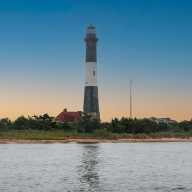
Romero was originally from New York City and, upon his appointment as superintendent, he said: “As a native New Yorker, I have spent many days enjoying the Great South Bay by boat, strolling the beaches of Fire Island, and have experienced some breathtaking sunsets that only Fire Island National Seashore has to offer. I look forward to working with all the communities, partners, and talented staff managing this beautiful resource that many people have come to treasure.”
In 1962, I had never been to Fire Island. Though I was also from New York City, I became an Eagle Scout there, relished nature, and my family camped during summers at Wildwood State Park in Wading River, my first experience in Suffolk County.
I got the reporter’s job at the Babylon Town Leader through an ad in The New York Times. Arriving on my first day of work, the newspaper’s publisher, James Cooper, and editor, John Maher, told me that Robert Moses had just announced his highway plan for Fire Island, and they wanted me to go there that weekend and put together a story.
As Robert Caro, an East Hampton resident and former Newsday reporter, wrote in his Pulitzer Prize-winning 1974 book, The Power Broker: Robert Moses and the Fall of New York, Moses had New York media in his pocket.
I lucked out on my visit to Fire Island, connecting with Fire Islanders, including TV journalist Charles Collingwood, playwright Reginald Rose, author Theodore H. White, and regular folks, who explained articulately how the island’s nature and communities would be impacted by the proposed highway. A walk in Sunken Forest made the environmental importance of Fire Island clear to me. I wrote a story, the first of many.
It was an uphill battle, and we kept pushing. We found, for example, how the four-lane highway Moses built to the west, along Jones Beach, rather than being an “anchor” of the beach—as Moses insisted a highway on Fire Island would be—needed to be regularly bolstered with sand pushed along its edges by bulldozers working at night.
The first telephone call I received the morning my first story ran was from Murray Barbash, an environmentally committed builder from Brightwaters. Murray and his brother-in-law, Babylon attorney Irving Like, co-author of New York State’s Conservation Bill of Rights, then organized a Citizens Committee for a FINS. Their view was that Moses could not be stopped on the state level because of the enormous power he wielded in New York State. If Fire Island were to be saved, it would have to be through the federal government. Also, a National Seashore offered a positive goal.
It was a relatively new idea. The first, Cape Hatteras National Seashore, was created nine years earlier, in 1953. I recollect the day U.S. Interior Secretary Stewart Udall, on a visit, embraced the FINS vision. I remember him standing amid the Sunken Forest, a rare maritime holly forest shaped by ocean winds, and viewing it in awe. Decades later, I met up with Udall at an event in New Mexico, and he recalled the day he concluded that, even though it was in close proximity to the nation’s most populous city, Fire Island deserved to be designated a National Seashore.
Also, conservation-oriented Laurance Rockefeller, the brother of then-Governor Nelson Rockefeller, became chairman of the state Council of Parks in 1963 and liked the FINS concept, too.
Moses was furious at what was happening. He confronted Nelson Rockefeller.
According to the Leader’s source, at a climactic meeting with Rockefeller, Moses insisted the highway would happen and that the governor put a lid on his brother. If Rockefeller would not, Moses threatened he would resign from his many commissions and authority posts. Governor Rockefeller would not be steamrolled. Happily, a FINS soon came about.