

Wetlands are areas where water and land meet, covered by water either permanently or intermittently. Phrases like tidal wetlands, coastal wetlands, inland wetlands, and non-tidal wetlands may all sound familiar. These are the environments that create marshes, swamps, and bogs. These unique transitional zones are vital to our ecosystems.
On Long Island, we are fortunate to have a front-row view of these wetlands. The entire shoreline of Long Island is made up of saltwater tidal wetlands, and the U.S. Fish and Wildlife Service (USFWS) estimates that there are 54,000 acres of wetlands on Long Island.
That is exactly why Ducks Unlimited (DU) has established its new In-Lieu Fee (ILF) Program to help combat the loss of wetlands on Long Island.
“Between 1928 and 2004, the region lost an estimated 48% of its tidal wetlands, with some marshes experiencing up to 100% loss,” stated DU in their formal announcement on the program. “A focused study of Long Island’s estuaries revealed a loss of approximately 2,700 acres of native intertidal, high marsh, and coastal freshwater marshes between 1974 and 2008.” Overdevelopment, nitrogen pollution, and erosion are all direct factors.
An in-lieu fee program is “an agreement between a regulatory agency or agencies (state, federal, or local) and a single sponsor, which must be a public agency or non-profit organization,” according to the U.S. Army Corps of Engineers.
In this case, the U.S. Army Corps of Engineers is one of the regulatory partners for DU, the largest 501(c)(3) non-profit wetlands and waterfowl conservation organization in the world.
This program enables Ducks Unlimited to serve as a third-party resource for credit mitigation for projects that cause unavoidable harm to wetlands and aquatic resources. By selling credits to organizations undertaking projects that harm wetlands, it serves as a permit that meets state and federal mitigation requirements. Then, using those funds to purchase the credits, Ducks Unlimited can reestablish, enhance, and preserve wetland habitats on Long Island.
“The New York State Department of Environmental Conservation (NYSDEC) recognizes the importance of tidal wetlands and requires strict adherence to NYS regulations when reviewing proposals that may affect these sensitive areas,” the NYSDEC Long Island region office stated to Great South Bay News. “The DEC’s goals when reviewing wetland permit applications are first to avoid, then minimize any impacts to wetlands whenever possible. DEC also recognizes that certain unavoidable projects may not allow on-site wetland restoration. This ILF program has the potential to provide an alternative option for those rare projects by requiring the permittee to buy credits to fund a dedicated restoration project overseen by Ducks Unlimited.”
Wetlands are essential not only for the environment but also for our communities. They serve as flood buffers, natural water filters, water-quality improvements, and storm protection. They defend our homes and quality of life.
“The Long Island ILF Program allows Ducks Unlimited to restore habitat on a scale that matches the urgency of the problem,” stated Program Conservation Director Patrick Raney. “By consolidating mitigation resources, we can repair historically altered wetlands at the scale of entire marshes, enhance protected area networks, and improve the resilience of aquatic ecosystems.”
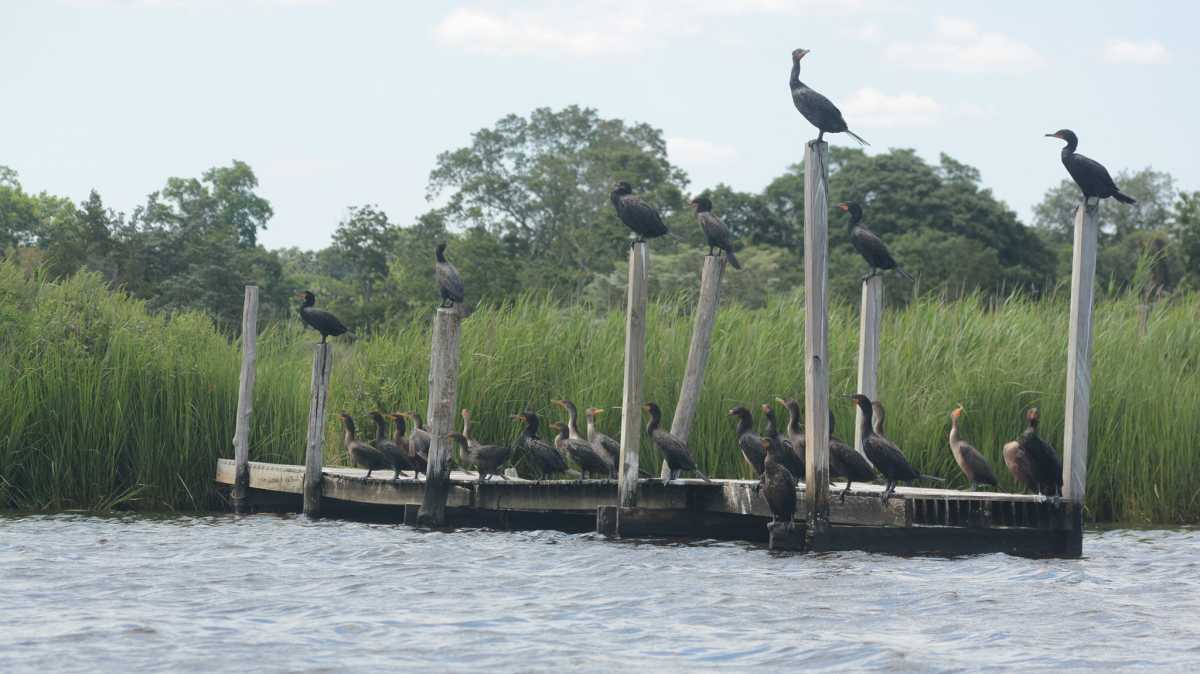
Wetlands serve as habitat for numerous plants and animals, including endangered species. Although not officially listed as endangered, the American Black Duck is a species that relies on wetlands. It has experienced a significant population decline, according to historical data, prompting increased conservation efforts. New York State, especially Long Island, is a central hub for this population, which is found only in the northeastern part of North America. Long Island is a major winter breeding ground for them and supports large numbers that remain year-round.
Similar patterns are observed in other waterfowl species. Long Island serves as a major stop for ducks migrating along the Eastern Coast. As ducks head south during the colder months, they pause along the coast to breed, rest, and feed in the wetlands before heading back north in the warmer months. During that time, our wetlands host millions of passing birds. They are divided into two groups: puddle ducks (which stay in marshes) and diving ducks (which remain in open water, like the Great South Bay).
Black Ducks, Mallards, Geese, Teal, Wigeons, Gadwalls, Pintails, Canvasbacks, Old Squaw, Scaups, Eiders, and Mergansers are among the waterfowl species that visit each year. Many stay through the winter because there is always some open water to feed on, despite the freezing temperatures.
Protecting Long Island’s wetlands is crucial for everyone. It safeguards our home and plays a vital role in the incredible phenomenon of waterfowl migration, which has been ongoing since ancient times. This new program is a step toward protecting and restoring these wetlands.
Since its founding during the 1937 Dust Bowl, DU has preserved over 19 million acres of wetland and grassland habitats. Last year, they conserved 1 million acres and raised $230 million for ongoing efforts.