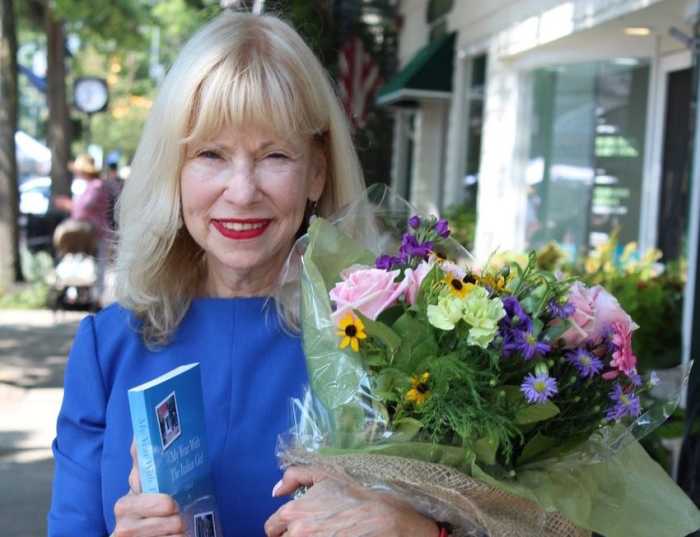



It’s often said that a novel mirrors reality, and lately that feels especially true. Across genres, readers can likely pick up on details or elements that relate to their lives, the current political climate, or the broader world around them. But when Elaine Kiesling Whitehouse began writing her novel Base Alta over several years and published it last fall, she didn’t anticipate how closely its themes would align with unfolding events in the United States and beyond.
As the former editor-in-chief of Fire Island Tide (which ceased publishing in 2021), staff journalist for the Suffolk County News, and the author of four novels, it’s no surprise that Whitehouse found a career in writing. However, Base Alta stands apart as it is not only a timely work, but also a reflection of Whitehouse’s life.
Whitehouse and her husband were a team that, to her, felt like it was straight out of an action movie. Living in California at the time, with him serving in the Navy, the two were at a crossroads, trying to determine their next steps. On a whim, they both applied to the Central Intelligence Agency (CIA), never expecting to hear back. Ultimately, they did, and both also spoke Scandinavian languages, which likely helped them, as fluency in a foreign language is one of the agency’s requirements.
Her husband served as an agent for two decades, and Whitehouse served for 14 years—experiences that later provided the foundation for Base Alta. Through Sonia Rosengren, a CIA agent and one of the novel’s main characters, Whitehouse channels her experiences into fiction. Whitehouse didn’t waste any time: the novel opens at full speed with the murder of Celine Mirza, a Middle Eastern woman killed in her driveway in a Long Island suburb.
The crime is initially dismissed as a case of mistaken identity because there appears to be no motive. But it quickly becomes clear that Mirza was one of four women working as CIA spies, all of whom were connected to Sonia and the covert operations tied to Base Alta, a secret outpost in northern Norway.
For readers who prefer nonstop action and fast-paced storytelling, Base Alta delivers an immediate sense of urgency. Amid the murder, the narrative swiftly expands to reveal XKIndulge, a highly classified operation led by Sonia. Its objective is to dismantle a far-reaching terrorist network planning attacks on major landmarks and areas in New York City and other locales. The result is a gripping mystery-thriller that keeps the tension high and the pages turning.
Another way Whitehouse keeps you on your toes is through her constantly shifting points of view. By moving between Sonia’s first-person perspective and a third-person lens that follows the broader setting and supporting characters, the narrative adds depth while maintaining momentum and suspense.
While the action is enjoyable and essential to the plot, the frequent shifts in narration and the use of CIA terminology can feel overwhelming, especially for readers who aren’t as familiar with that world. Additionally, some moments and character resolutions might have been even more impactful with greater emotional depth and clarity.
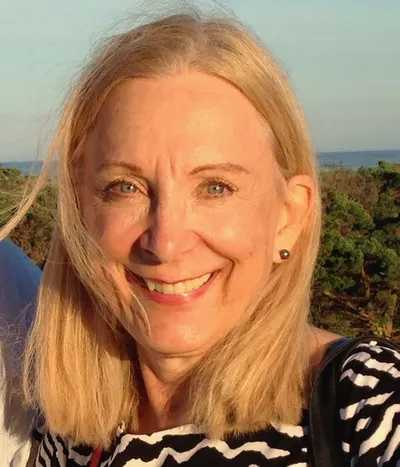
Still, Whitehouse’s real-life experience brings an undeniable authenticity to the narrative, particularly in its portrayal of intelligence work, the human spirit, and the recognition of how lucky we are to be part of this beautiful world. A moment in chapter 28 feels especially relevant to today’s political climate, reinforcing the novel’s timely and unexpected parallels to life.
As Whitehouse writes, “Someone said it was only a matter of time before one madman with a nuclear weapon would start a nuclear war.”
For readers drawn to espionage and politically charged thrillers, Base Alta offers an insider’s perspective and an ambitious scope. While it may not resonate with every reader, it remains a timely and thought-provoking addition to the genre. I stepped out of my reading comfort zone, as I usually steer clear of heavy political novels, but I can’t help but applaud Whitehouse for her thoughtful storytelling and the meaningful lens she offers into the complexities of global conflict and the human impact she portrays.