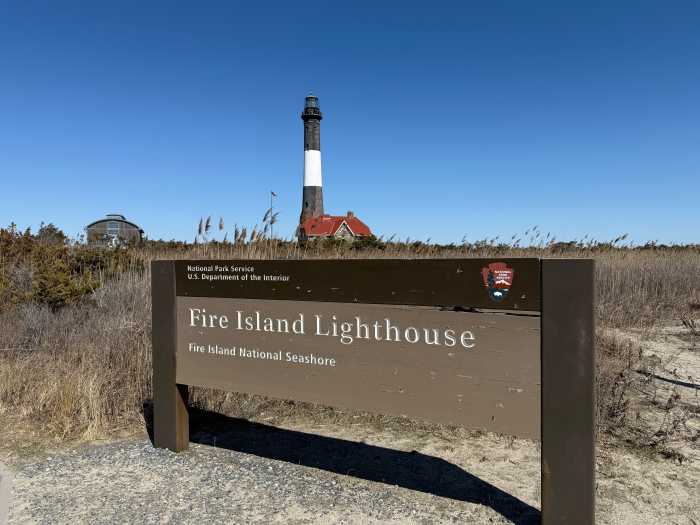


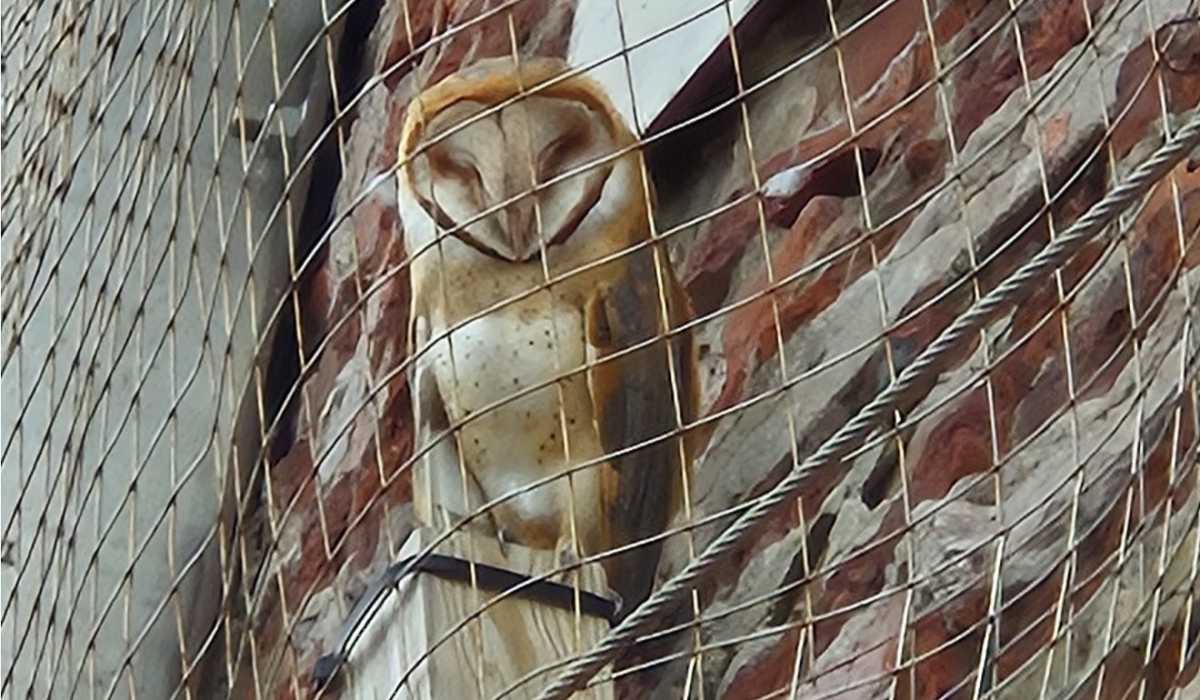
A barn owl that became trapped within the Fire Island Lighthouse tower on September 16 prompted Sweetbrier Nature Center to assist. The wildlife rehabilitation organization based in Smithtown made the cross-island trip to the Great South Bay at the behest of concerned visitors and lighthouse volunteers, according to representatives from Sweetbrier. The bird of prey sought refuge in one of the carved windows along the shaft of the lighthouse tower —possibly in search of a nesting site, according to Sweetbrier’s report on social media—when it became trapped behind wire fencing, which has surrounded the tower for more than a year as repairs to the lighthouse remain unfinished.
With assistance from Fire Island National Seashore (FINS) rangers and Fire Island Lighthouse volunteers, a hole was cut in the fencing and peeled back at the window, allowing the owl to find its way out and fly away.
“Barn owls have always adapted to the human world,” wrote Sweetbrier. “From nesting in thatched roofs to old wooden barns, they’ve taken up residence wherever we’ve made space.”
Sweetbrier further states that although barn owls have adapted to our environment, suitable nesting habitats have become increasingly scarce in our mechanized world. They suggest that installing a nesting box can make a difference for them and also be beneficial, as barn owl families can eat over 1,000 pests a year, providing natural pest control that’s cheaper, safer, and more sustainable than traps or poisons.
The Fire Island Lighthouse Preservation Society (FILPS) relayed to Great South Bay News that they are relieved the owl was rescued safely and urges the National Park Service (NPS) to resume repair efforts on the nationally landmarked lighthouse to help protect local wildlife. Learn more about what you can do to preserve and protect Long Island’s wildlife by visiting www.sweetbriarnc.org.