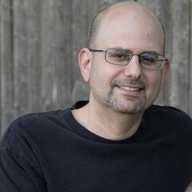


Some folks don’t know what to do with themselves when they retire, but Oyster Bay’s Steve Israel had no such problem. Former Democratic Congressman from Long Island for 16 years, Israel left Congress in 2017 and started a new chapter by opening Theodore’s Books—named after President Theodore Roosevelt, a fellow booklover who lived nearby. He remains the only Congressman ever to pursue such a venture.
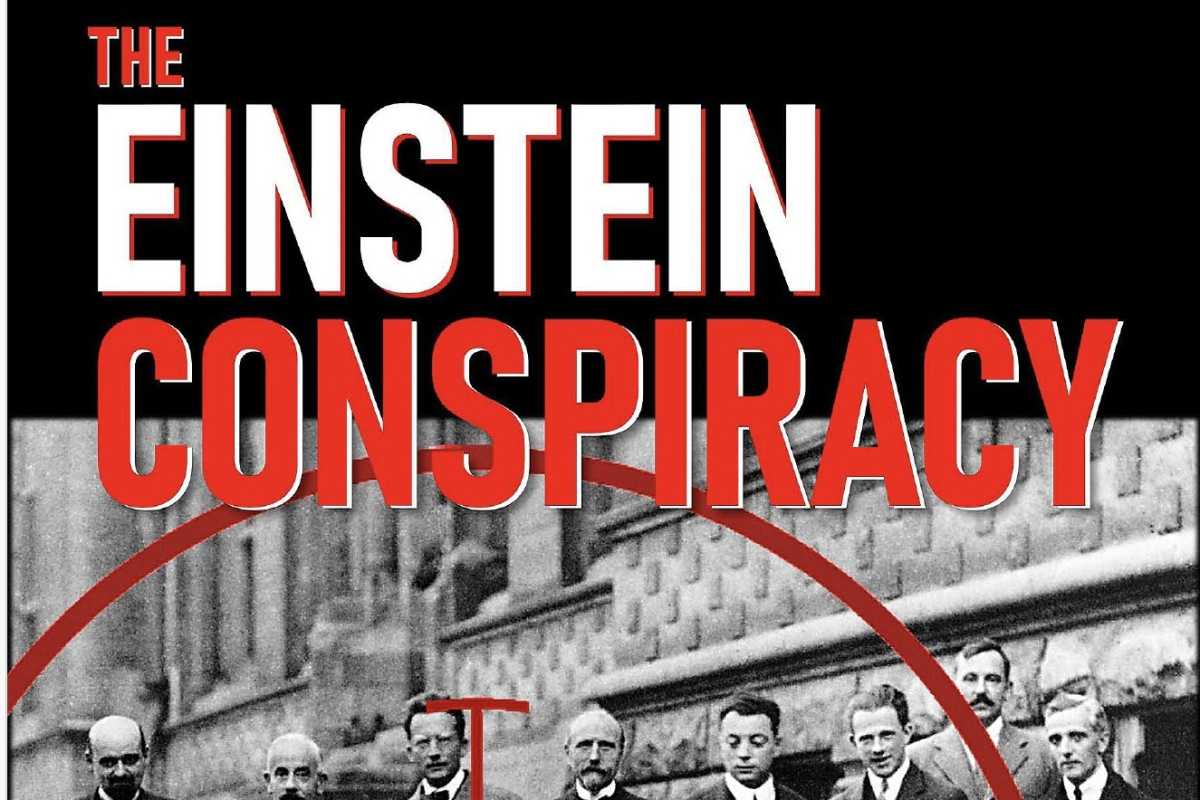
Author of the political satires Big Guns and The Global War on Morris, Israel applies his pen and love for drama to historical fiction in his most recent novel, The Einstein Conspiracy.
Set chiefly in North Fork in the 1930s, the plot focuses on a Nazi attempt to kidnap Albert Einstein and bring him back to Germany; they fear that he, too, is working on a super bomb. “A race against scientists an ocean away.” Short chapters that shift point of view and locale heat the action and intrigue.
In Reich headquarters, Nazi agent Anton Gunther, or “Chameleon,” plots Einstein’s capture and, in the U.S., poses as Jewish Max Goldschmidt to get up front and personal with the great man.
Israel has his eye on the times and hands out our own brand of 1930s racism to FBI agents, Harry Weiss and James Amos. “Amos could never get used to how many white men refused to shake hands with him.” And J. Edgar Hoover, who didn’t know what to do with the only Jew and Negro in his department, paired the oddball team to shadow Einstein and keep him safe.
The white-haired one opens the story “…peering over the railing” as the ocean liner Westmoreland “steamed toward Manhattan.” Is that great brain of his on the “cutting edge of modern physics” he will share with his Princeton students? It is not. Einstein is thinking about ice cream—“… an American ice cream cone, with two scoops of vanilla… better than even the best he could get in Berlin.”
The author gets real with Einstein, portraying him as a human being with wants—and a healthy dose of faults and foibles—just like the rest of us. An amusing chapter on his compromised sailor ship throws light on his “certain stubbornness.”
Though he loved to take out his sailboat Tinef (Yiddish for “little piece of junk”), he could not manage the boat he kept on Peconic Bay. (Einstein lived briefly in Southold in 1939). And though he never learned to swim and refused to wear a life jacket, he remained unfazed when he ran the boat aground. “People had to go out and rescue him,” or when the Princeton Yacht Club wanted to ban him.
There was no stopping author Israel from writing about Einstein when, on a random car ride, he came across that Southold cottage and discovered it was there that the physicist wrote to President Franklin Delano Roosevelt, urging him to consider the Nazi threat that led Roosevelt to implement a “major new federal research project on an atomic bomb.”
Rooted in facts and crafted into convincing fiction, The Einstein Conspiracy contains more than a hint of truth.
There were deeply planted Nazi roots on Long Island in the 1930s that included the children’s summer getaway, Camp Siegfried, in Yaphank, under the aegis of the German American Bund. Streets named Hitler, Goebbels, and Goering dotted the tranquil country roads. And, as chilling as it is, there was a 1939 Madison Square Garden rally that attracted 20,000 Nazi supporters from the Upper East Side. “The Nazi cancer had spread.”
And it is still spreading.
Note the recent shooting on Australia’s Bondi Beach on the first night of Hanukkah, which killed at least 15 people and injured many more. And the innocent students who were gunned down and traumatized at Brown University. Hatred and bigotry blot out the light of freedom. Are we helpless to stop the horror? Or maybe each of us, in our own small way, can help counter bias with an open-mindedness that accepts others who look different and think differently from us.
“The world will not be destroyed by those who do evil but by those who watch them without doing anything,” Einstein famously once said.
Agent Amos is based on Theodore Roosevelt’s valet, who advanced to his personal bodyguard and was the last person to see Roosevelt alive. And… he may be the subject of Israel’s next book.
A Word from the Columnist: As your book reviewer for more than a decade, it’s been a pleasure to read and write for you. I hope you’ve enjoyed my reviews along the way; this will be my last. Fiction, nonfiction, memoir, bio, and poetry—these are stories, after all. Stories matter. They connect us and make us human. – Rita Plush