Patchogue Village is getting closer to collecting your organic food scraps for compost purposes.
They will be picked up at specific locations in the village, then sent to an anaerobic digester in Yaphank.
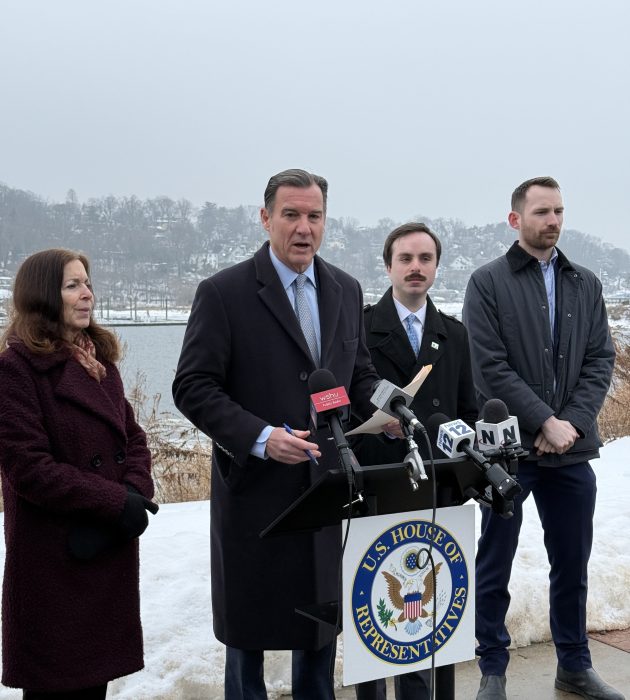
“This will be the first program of its kind,” said Patchogue’s Business Improvement District Director David Kennedy. “The digester takes the food scraps and converts them into energy,” said Kennedy. “Right now, it would be a pilot program.”
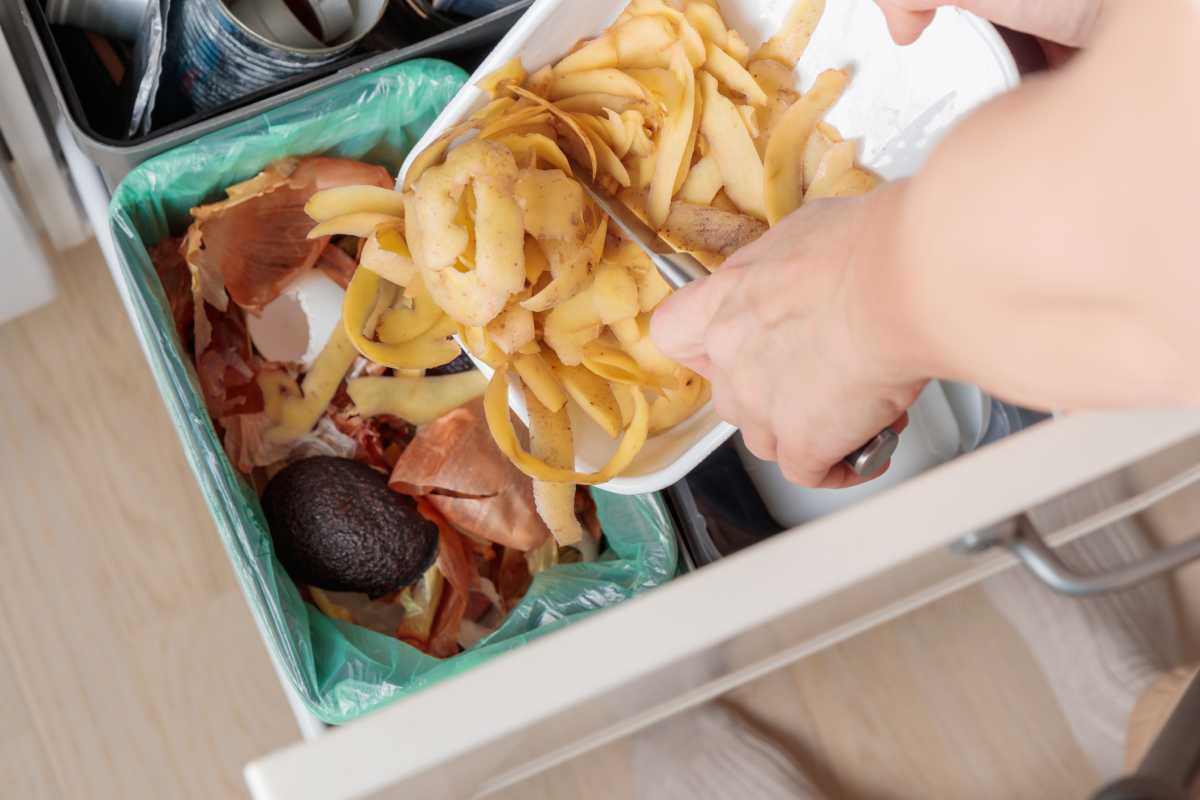
These items include banana peels, coffee grounds, vegetable scraps, eggshells, and other organic materials.
A composting grant was pitched by Adrienne Esposito, executive director of Citizens Campaign for the Environment, supported by then-trustee and environmental champion Joe Keyes, and approved by village trustees in Dec. 2024, before Keyes passed in 2025.
“We saw that the DEC opened a grant process for composting programs, and I’ve also worked for years with Charles Vigliotti, the president of Long Island Compost. I knew he was developing the anaerobic digester (through American Organic Energy in Yaphank, run by Charles and his brother, Arnold Vigliotti). The digester will turn food waste into compost and renewable energy, so we approached Charles to see if he would partner with the Village of Patchogue and handle the composting for free, which he agreed to do. We met with the village, and they were very eager to start the program. Kennedy said a $164,074 New York State DEC Organics Reduction and Municipal Food Scraps Recycling grant was awarded last May for the pilot program.”
According to ReWild LI, there are a number of food drop-off locations in Nassau and Suffolk counties (Brookhaven/Bellport Community Garden is one of them), as well as on the North and South Forks. But municipalities have been stepping up over the years. Riverhead has been cited as the first to offer a food scrap drop-off program in May 2023. Other towns have been on board, like East Hampton, which started early efforts and then offered such a program in July 2023, and Southold, whose debut was in Dec. 2024. Shelter Island has been offering a similar program for years.
Bellport mayor Maureen Veitch said she had her first meeting with Kennedy, Environmental Committee head Marc Rausch, Department of Public Works (DPW) Superintendent Jason Crane, and village clerk Mary Pontieri to educate them about the program.
“It was a fact-finding mission for us,” Veitch said. “We are always happy to work with other municipalities for purposes of shared costs, so it is in the early days right now. The next step is to have the facility up and running; once that happens, we could participate fully.”
Veitch, who also owns an apartment in New York City, pointed out that the city passed a composting requirement law in 2025. She adheres to the law, stores compostable food scraps in her fridge, and then drops them off in her building’s receptacle.
“We are all going to have to come to terms with our waste,” she said. “We can’t just keep mindlessly filling up a landfill.”

Esposito said the grants are only available to municipalities, as they can partner with not-for-profits. Vigliotti will only take food waste, which is approved by New York State as renewable energy.
It’s been a seven-year slog to build and open the digester for several reasons.
“Supply issues,” Esposito said. “The cost of materials doubled, and it took seven years to get a permit because nothing like this has been done before.”
The expected opening of the anaerobic digester is fall 2026.
“We might conduct the education process this spring by holding a public workshop on the dos and don’ts training session on composting,” Esposito added. “To qualify, they must live in the village, complete the one-hour composting course, and receive a composting bucket.”
Still in the planning stages are choosing 100 families for the pilot startup and five targeted pickup locations. Kennedy stated that the locations would be public places yet to be determined.
The scraps will then be collected by village employees from the sites and brought to the DPW.
“American Organic Energy in Yaphank will then pick up the organic waste,” Kennedy confirmed.
The collected organic waste will be separated, preprocessed, broken down, and converted into energy, vehicle fuel, electricity, fertilizer, and nutrient-rich water.
According to American Organic Energy’s website, the anaerobic digester will host 180,000 tons of local food waste per year.
A 25% grant match is required to cover the purchase of collection bins, program education, and DPW employee costs, which Citizens Campaign and Patchogue Village will fund.
Kennedy said, “The order is in for five Big Belly compactors designed for food scraps that we’ll put in public places.”
Program participants will receive a code to open the compactors.