Seatuck Environmental Association is being recognized for its concentrated efforts in wildlife conservation of terrapin turtles on the South Shore of Long Island. The South Shore Estuary Reserve Program (SSER) has awarded the organization a grant to support its diamondback terrapin conservation efforts, which began roughly two years ago. Seatuck is one of eight projects or non-profit organizations selected by the SSER after applying back in July.
Seatuck will receive $74,000 through the grant, according to Executive Director Enrico Nardone. In total, $2.4 million is being distributed among all the programs by the SSER, which is funded by the New York State Department of State.
“The South Shore Estuary Reserve is one of New York’s most valuable resources, and these grants will help ensure it remains healthy and resilient for generations to come,” said Walter T. Mosley, New York Secretary of State, in a press release.
The South Shore Estuary Reserve includes all the bays, tidal wetlands, marshes, creeks, beaches, and tributaries that extend from Long Beach to Southampton, forming the South Shore of Long Island. In 1993, the New York State Legislature established the SSER to protect and conserve this unique yet vital ecosystem. Since its formal founding in 1989, the Seatuck Environmental Association has been a leader in conservation efforts within the estuary. The diamondback terrapin inhabits the brackish water—a mix of fresh and saltwater—of the estuary and is considered a keystone species.
Classified as Malaclemys terrapin, this is the only turtle species native to North America that lives in brackish water. These turtles are omnivores and consume a wide variety of shellfish and mollusks.
“They are relied on in how the estuary functions; they lay a lot of eggs, and other species eat them,” said Nardone.
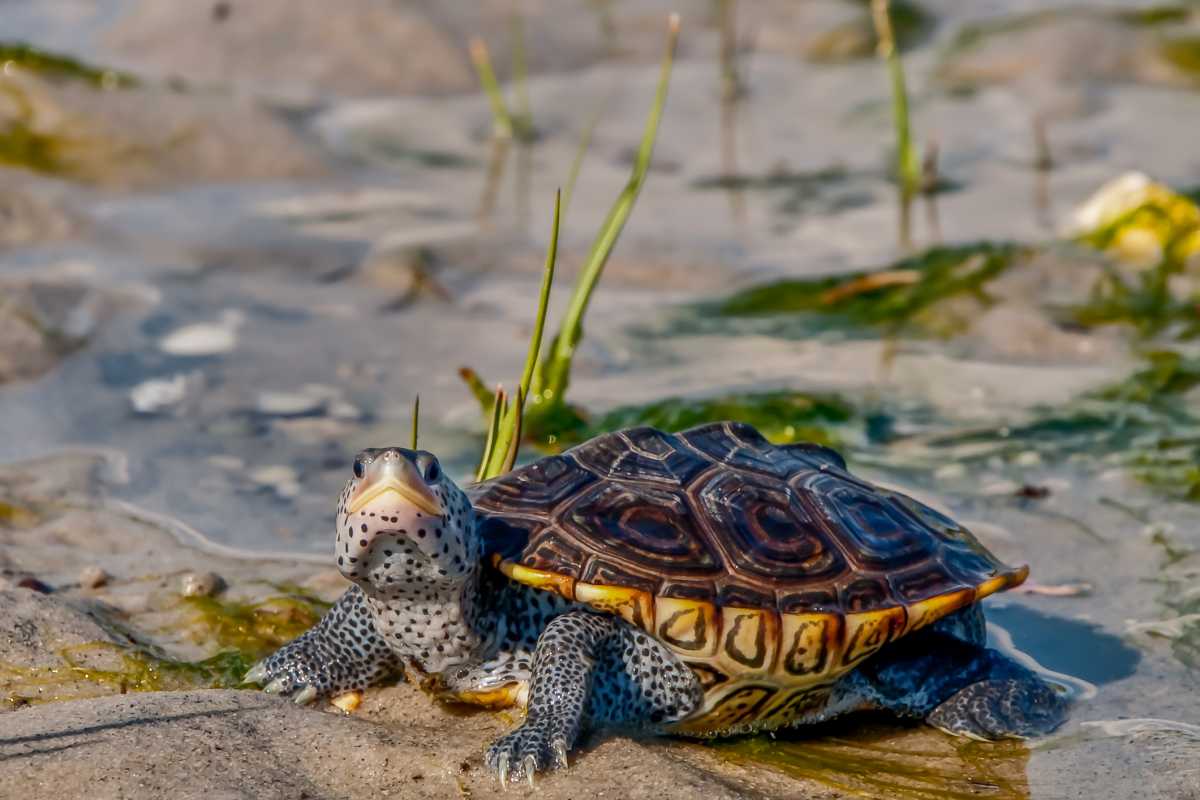
A diamondback terrapin has a light-colored body (white to gray) with black spots on the head and neck, and a brown-to-blackish shell with deep, diamond-like circular patterns, according to the NYSDEC. Their shell length (carapace) can range from three-and-a-half to nine inches, with females typically having the larger shells.
Unfortunately, like many endangered species, habitat loss significantly threatens their population. Human development is encroaching on their habitats, especially along the coast where they nest. These terrapins seek sandy, unvegetated areas—usually beaches—to lay eggs, but such sites are becoming scarcer. Collecting terrapins for food was only outlawed in New York State in 2018. Overharvesting turtles was common in the 1800s and early 1900s for turtle soup.
In 2017, it also became mandatory to use Terrapin Excluder Devices (TEDs) on all crab pots in marine waters. These devices allow the oxygen-breathing terrapins to escape from crab pots they enter while searching for food, preventing drowning. Additionally, vehicle and boat collisions, rising sea levels, and global climate change—combined with other threats—have Seatuck concerned about the long-term survival of this species.
“We’re still learning more about them and trying to figure out how to help,” explained Nardone. “We want to identify where exactly on the South Shore the population is doing well.”
That is where volunteer help comes into play. Tracking and assessing these turtles is difficult due to the small amount of time they spend out of the water. According to Nardone, the NYSDEC implemented head counting as a form of tracking. When the turtles surface to breathe, spotters take note. The use of drones is another spotting method, making it easier to see them in the water from above. “You can also identify turtles on beaches and find areas where they are doing well,” said Nardone.
Seatuck wants to start training volunteers to become skilled at spotting these terrapins. The entire $74,000 grant will go toward the terrapin conservation program and could play a large role in helping launch it.
“We hope this is the first step in long-term conservation of the diamondback terrapin,” added Nardone.
If you would like to get involved with Seatuck, you can find out more on their website, Seatuck.org. The non-profit 501(c)(3) also has a beautiful environmental center in Islip Hamlet that you can visit to see why they do what they do. It’s a work in progress, but the diamondback terrapin efforts are very important.