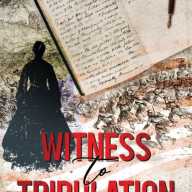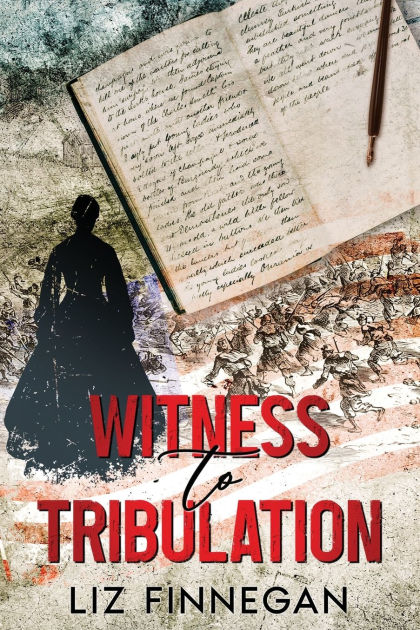
If you were to ask Liz Finnegan, the author of Witness to Tribulation, why she wrote a book set in Gettysburg, Pennsylvania, she’d likely tell you that there’s something special about this place—not only its story, but of course, all the history and spiritual connection of knowing what happened there all those years ago.
Finnegan is the former editor-in-chief of The Islip Bulletin. Her husband, Robert, has been the longtime Islip Town Historian. As a couple, they have always shared an interest in American history. Don’t be fooled, though. Gettysburg wasn’t on Finnegan’s top 10 places to visit list or anything. However, after exploring with her sons, the history kept calling her back. That pull ultimately shaped the novel’s setting, alongside the fictional Long Island town of East Springs, which reflects Finnegan’s own ties to Islip.
The significance of the title Witness to Tribulation becomes clear early on. Emily Tomaso is 24 when she arrives in Gettysburg, seeking a fresh start in her late grandmother’s house. She hopes the distance will dull grief, family strain, and unresolved secrets. But the discovery of an old diary with the same title gives Emily a glimpse into past trauma she wasn’t expecting to find.
Tribulation is also a central theme throughout the story. It plays a key role in Emily’s journey and in the lives of every other character in the narrative. For Emily, that tribulation takes the form of losing her grandmother, the person she felt closest to, along with her inability to connect with her mother and fully confront the pain she’s been avoiding.
Her mother, Mandy, carries her own burden of grief, albeit expressed differently, stemming from the loss of a mother she was never close to, the death of her first husband, and the betrayal of an affair that ended her second marriage. And then there’s Peter, a longtime Gettysburg resident and Emily’s love interest, who’s dealing with the pain of his past, family expectations, and learning to fully understand vulnerability.
There are always new challenges to face, and something that Finnegan makes clear is that no one, whether real or fictional, is spared from life’s daily turmoil. Through the emotional diary entries of Emily’s ancestors, the novel expands its focus beyond a single character, reinforcing the idea that tribulation is both deeply personal and quietly universal.
Finnegan details this many times, but it stands out especially in a conversation between Emily and Peter toward the end of the book. She writes. “I guess we’re all victims of our own personal wars. We just have to understand what it is we’re fighting.”
These lines effortlessly portray the tribulation each character experiences.
The book also brings together multiple narrative threads, some of which felt more finished than others. However, the writing style effectively captures Finnegan’s desire to explore grief, history, memory, trauma, and pain from many angles.
Additionally, the inclusion of the Civil War—era diaries, strained family dynamics, whispers of supernatural occurrences, and shifts into flashbacks provides layers and depth, but could have benefited from clearer transitions or timelines.
The romance subplot between Emily and Peter follows a similarly swift progression, and their connection is established quickly. Soon, they are spending significant time together, with Peter stepping into the role of Gettysburg tour guide. While their shared histories and lingering secrets add intrigue, I would have liked to see more space devoted to exploring their emotional bond.
Witness to Tribulation is an easy and engaging read, even though I paused at times to note overlapping character names, various timelines, and other minor details that contributed to the story.
Finnegan’s choice to repeat the character names in the diary entries and in the present day may resonate with others, as it thoughtfully highlights how the family’s struggles repeat across generations.
Although I didn’t feel as immersed in Gettysburg’s history as I had hoped, Witness to Tribulation still offers a reflective experience that’s both impactful and meaningful. Thanks to its tone and emotional voice, the novel encourages readers to look back on both their own pain and that of others, offering a path toward coming to terms with personal burdens.