Already this year, Brookhaven has taken a straightforward approach to protecting our bays: make developers pay for what they damage.
The Town Board advanced changes to its wetlands and waterways code, setting a specific price for projects that cross ecological buffers. Developers unable to meet the required upland buffer will be charged $10 per square foot in mitigation fees. Building a dock or any unauthorized structure on Town-owned underwater land? That’s $20 per square foot.
“There are many properties with easements to the water,” explained Town Attorney Annette Ernesto during the Town Council meeting on Jan. 29. She pointed to examples in Center Moriches, where residents have been trying to install floating docks within 15-foot easements and have several boats blocking the canal. “So, we are removing that,” she added. “This clarifies the definition of a Riparian right.”
Riparian rights are landowners’ legal entitlement to make “reasonable use of the water,” such as fishing and recreational activities—placing expansive docks that could block navigation and harm habitats are no longer allowed. The town will also require wetlands permits for basement conversion projects. “We have climate change and sea level rise—that needs to be addressed,” Ernesto said.
Every dollar goes into an account managed by the Division of Environmental Protection, earmarked for wetland and shellfish restoration projects—hopefully making life easier for the people who actually rely on our waters.
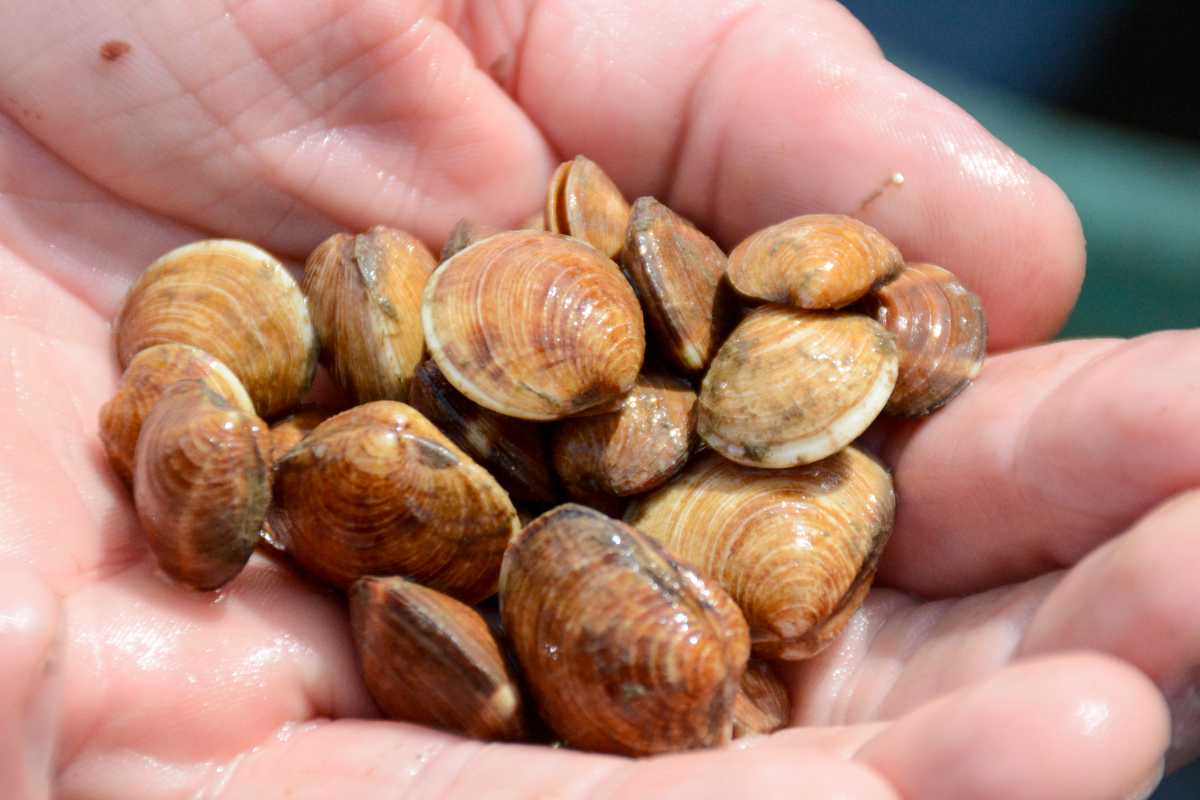
This kind of environmental news flows through the Great South Bay the way tides move through inlets—constantly shifting, easy to miss if you’re not watching. We have to look no further than another seemingly inconsequential resolution to establish the hard clam endorsement for 2026, maintaining a regulatory framework in Brookhaven that’s been protecting some of Great South Bay’s most productive waters since 2012.
Without this special stamp on your commercial shellfish permit, you can harvest anywhere in Brookhaven’s underwater lands—except the premium zone.
That restricted area extends across central Great South Bay, from east of Homan’s Creek in Bayport to west of Barrett Beach Pier on Fire Island, and up to the William Floyd Parkway bridge between Shirley and Smith Point. It is the most productive hard clam area in eastern Great South Bay, and it is reserved for baymen who can demonstrate their commitment.
The Town Board determines the total number of endorsements by resolution, adjusting based on recommendations from the Division of Environmental Protection. These recommendations consider hard clam census data, annual harvest statistics, baywide population trends, and the total number of endorsements issued by Brookhaven, Babylon, and Islip—the three towns managing Great South Bay’s waters.
For 2026, the Board increased endorsements by 25, bringing the total to 175.
Craig Strong, a bay management specialist with the Town, describes consistently positive trends in the hard clam fishery. Based on New York State Department of Environmental Conservation landing reports, shellfish buyer data—including a 2024 incident where buyers had to temporarily halt hard clam purchases because they couldn’t market the volume being harvested due to the closure of Old Inlet—and recent shellfish surveys conducted by the Towns and The Nature Conservancy, the bay can support more harvesters.
Once you have the endorsement, you’re limited to 2,000 hard clams per day from the restricted zone.
“Harvesters were easily making their quota,” Strong said. He added that it’s a cap designed to keep harvest sustainable even as the clam population thrives.
Southampton is monitoring whether Brookhaven’s model can be applied to Shinnecock Bay, where a Stony Brook University restoration project led to a 1,500 percent increase in hard clam harvests from 2012 to 2022. The town this year implemented a 2,000-clam daily limit and is considering a certification system that would require three or four years of licensed experience before allowing work in the most productive areas.
The logic is simple: if restoration efforts succeed in producing abundant resources, those resources must be protected from overuse. The endorsement system encourages long-term commitment to the fishery, rather than allowing newcomers to harvest rewards right away.
Additionally, those mitigation fees approved in January establish a parallel protection system. As pressure on waterfront properties increases—and it will, given Long Island’s housing market—restoration funding directs support toward productive clamming grounds.
“Harvest restrictions can be beneficial for certain fisheries; however, the improvement in water quality and the increase in several shellfish populations facilitated by the breach were instrumental in the enhancement of the hard clam fishery,” Strong said.
While the endorsement system limits access to certain waters, it doesn’t prevent anyone from becoming a bayman. You can obtain a commercial shellfish permit and work in the unrestricted areas of Brookhaven’s underwater lands. You can harvest bay scallops, soft clams, mussels, oysters, and hard clams east of the William Floyd Parkway or in other town waters.
To qualify for the 2026 endorsement, you must have held one in 2025 or meet specific criteria: active military service that prevented you from obtaining one earlier, five consecutive years of holding a commercial shellfish permit from Brookhaven, Islip, or Babylon, a family history of commercial hard clamming in the bay, or demonstrated investment in harvesting equipment plus at least three of the last five years holding a New York State shellfish digger’s license.
Those who didn’t initially qualify were placed on a waiting list. Endorsement holders who didn’t renew by Feb. 14 made room for those on the list, and the total number of permits issued stayed below the cap.
These policies—endorsement programs and responsible Raparian rights—create effective incentive structures: experienced baymen gain reliable access to productive waters, encouraging them to support conservation efforts that ensure long-term sustainability. Development funds the restoration that maintains water productivity. New baymen can enter the fishery, but they’ll work their way into the prime zones rather than arriving at an open-access free-for-all.
J.D. Allen is a lecturer at the School of Communication and Journalism at The State University of New York at Stony Brook. He is an inaugural recipient of the Eric and Wendy Schmidt Award for Science Communication from the National Academies of Science, Engineering, and Medicine for the podcast Higher Ground. J.D. and his family regularly enjoy cafés along the main streets of Great South Bay.