

The days are growing shorter, and the first cool breezes of fall are upon us. Parents are celebrating, while kids mourn the end of summer and face the inevitable back-to-school season.
Within Long Island’s 124 school districts, a handful qualify as micro districts. Remsenburg-Speonk, Sagaponack, Fisher Island, and Fire Island have fewer than 200 students and offer a small-town/rustic, country-style quality of life for residents.
For Fire Island, after the tens of thousands of residents leave following Labor Day, the island maintains an estimated 300 to 400 year-round residents. Braving the isolated winter months for the tranquility of ocean waves and salt air, families enjoy a car-free island life. Their children, 40 in total, benefit from one of the lowest teacher-to-student ratios in New York, guaranteeing the most personalized education a public school can offer.
Fire Island School Union Free District (FIUFSD) was chartered in 1918 by Mina Woodhull, three years before the incorporation of Ocean Beach. Operating out of Woodhull’s home until the mid-1920s, two one-room schools were later built in Ocean Beach and Kismet. By 1954, the two schools were consolidated at their current site, now known as the Woodhull Elementary School—named in honor of Woodhull’s son, Richard—a beloved longtime principal.
Transporting students and teachers throughout the car-free island while navigating unpredictable weather conditions has been, and continues to be, one of the Fire Island School District’s biggest daily challenges.
John Lastorino, head bus driver with FIUFSD, is still new to the district, having been with the school for only two years. Prior to that, he worked for Suffolk Transportation and managed many more drivers.
“But this is equally challenging,” says Lastorino. “You would think that since it is a small district, it would be easier than what you come across on the mainland, but it is just as challenging.”
According to Lastorino, both staff and students are bused to the school.
“We use the Captree boat basin as a hub,” he explained. “Students who pay out-of-district tuition and any student on Fire Island are required to be picked up; the furthest east we [presently] go to pick up a student is Point O’Woods.”
Once the students graduate from Woodhull, FIUFSD is required to transport them during their middle and high school years. Students are transported to Bay Shore High School, Bay Shore Middle School, Islip Middle and High School, and Bridges Academy.
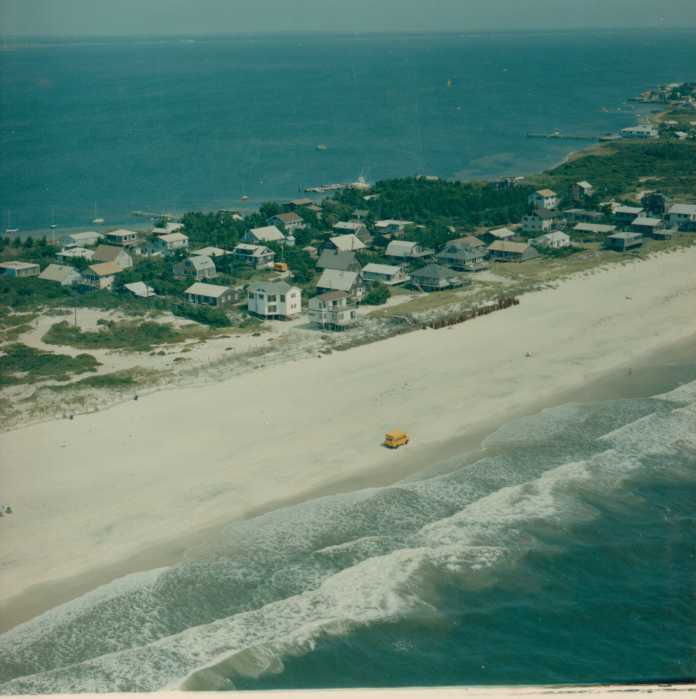
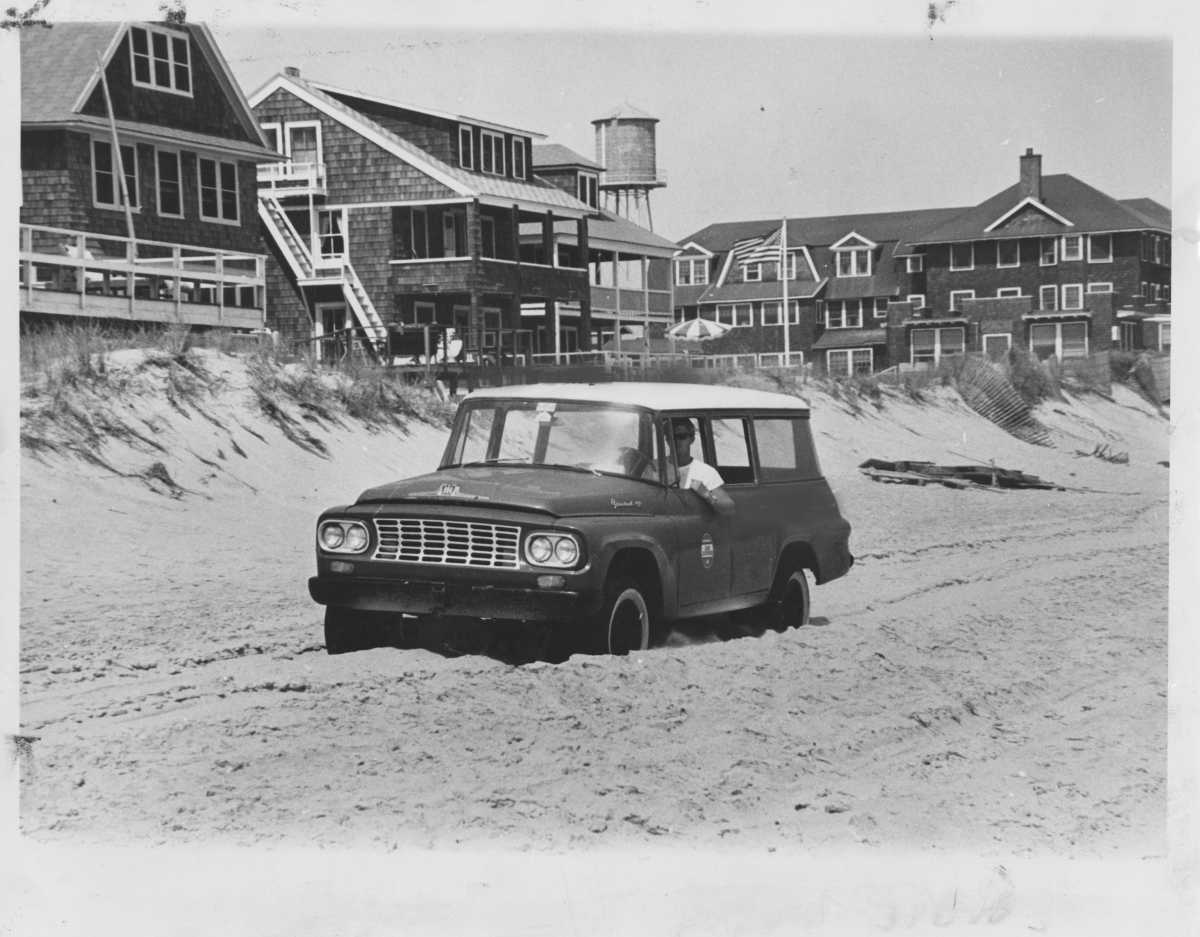
The bus fleet is also unique, with modifications sometimes made to help the buses handle the beach terrain. Currently, the fleet includes several vehicle models: a dually with two rear axles that can accommodate up to 20 students; a single-wheel bus that transports up to 16 students; and, for staff and shorter trips, a Suburban. All have four-wheel drive.
There are also two routes. The beach route starts at Field Five, Robert Moses State Park. After the ranger station, take the Kismet cut (the path to the beach), then exit at the Robbins Rest cut to the school. The alternative route is to drive on the inside road all the way to the school.
“The biggest challenge we face is beach erosion, which limits our beach access,” says Lastorino. “For example, when the tides come up unusually high in Kismet and wash out a portion of the beach, leaving ledges, you will need to come onto the beach from the Kismet cut to notice the eroded part of the beach, and then you can become stuck. You need to know the beach conditions in advance. That’s why we are always checking the tides and the conditions. You do not want to get caught in a situation while driving, with no more beach.”
That challenge was best illustrated in a video clip that went viral on social media after Fire Island News posted it this past spring.
“Another challenge is the unpredictability of the beach,” Lastorino continued. “Soft spots cannot be predicted, and you can easily get stuck. If you feel the bus is laboring a little, or you have to put in a little more effort to get through the sand, you have to ease off the accelerator, or you will be buried up to the frame. The trick is to resist the temptation to use the accelerator.”
Perhaps the major takeaway in speaking with Lastorino is that safety is a priority at FIUFSD.
“Overall, the core of what we do is safety,” he concluded. “Personally, I feel these routes are extremely safe. Our speed limits are 8 mph; you can see any oncoming traffic from a quarter mile away, and there are no railroad crossings or similar hazards.”