

Fire Island National Seashore hosted a public workshop, “Discussing Potential Pathways Connecting Communities,” on July 24 at Whyte Hall in Fire Island Pines. The workshop introduced two potential community connections for future study: Fire Island Lighthouse to Kismet and Cherry Grove to Fire Island Pines. Superintendent Alexcy Romero emphasized that the meeting was the first in a series of public discussions to gather community input before any formal planning or design begins.
Residents, renters, shareholders, and community leaders from Cherry Grove and the Pines, including representatives of the Cherry Grove Property Owners Association (CGCAI), Community Association, and the Fire Island Pines Property Owners Association (FIPPOA), attended the meeting to discuss the future stewardship of the Carrington Tract and the forest connecting the two communities.
Romero opened the meeting by explaining that no proposal has been developed and no decisions have been made. Rather, the purpose was to introduce the concept of improving access between the communities and to gather public input before any planning moves forward. He also discussed the Seashore’s stewardship responsibilities in Kismet, where access issues differ because of the existing gravel roadway that connects the community to the Lighthouse.
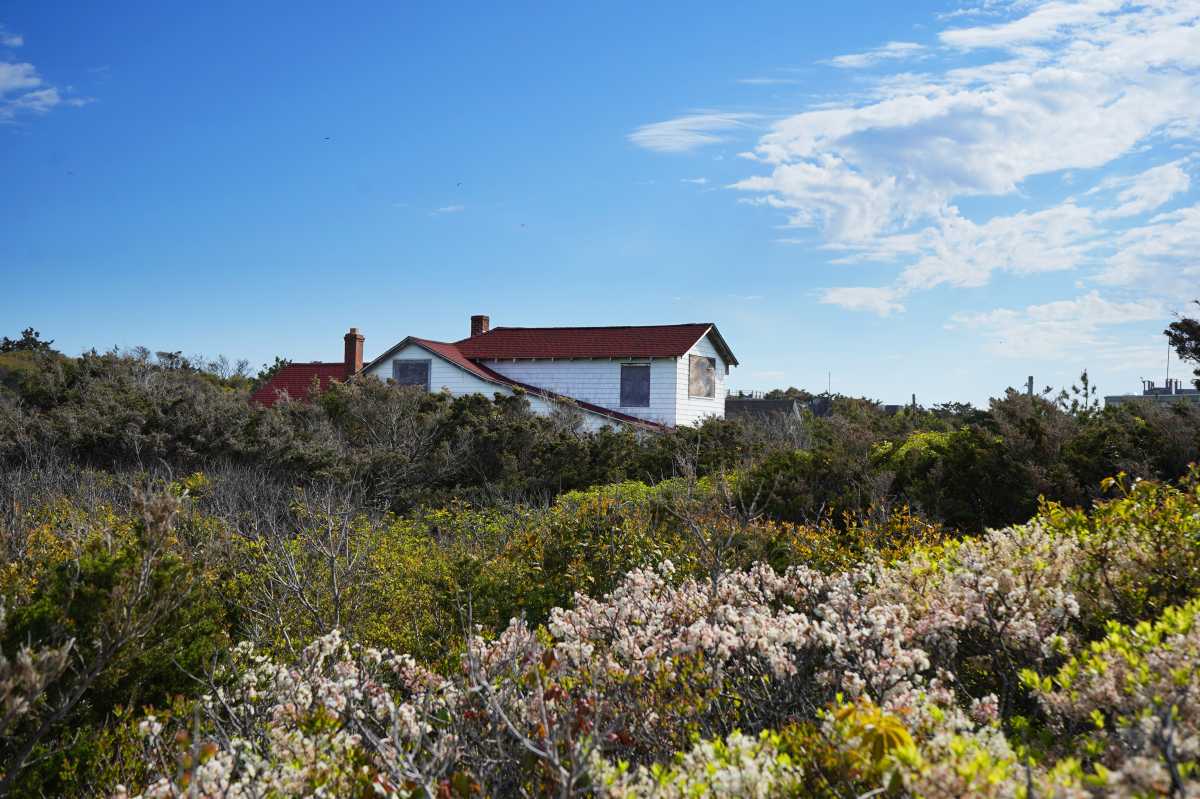
This discussion focused on the forest corridor between Cherry Grove and the Pines. For generations, this narrow maritime forest has served not only as a natural link between the communities but also as one of Fire Island’s most culturally significant landscapes. Any discussion of access inevitably raises questions about ecology, history, public safety, and the preservation of LGBTQIA+ heritage. These overlapping values shaped nearly every question raised during the afternoon.
The National Seashore outlined several reasons for improving access, including visitor safety, creating a designated trail, improving access to the Carrington House, reducing the use of informal trails that damage vegetation, and helping first-time visitors navigate the forest between the communities.
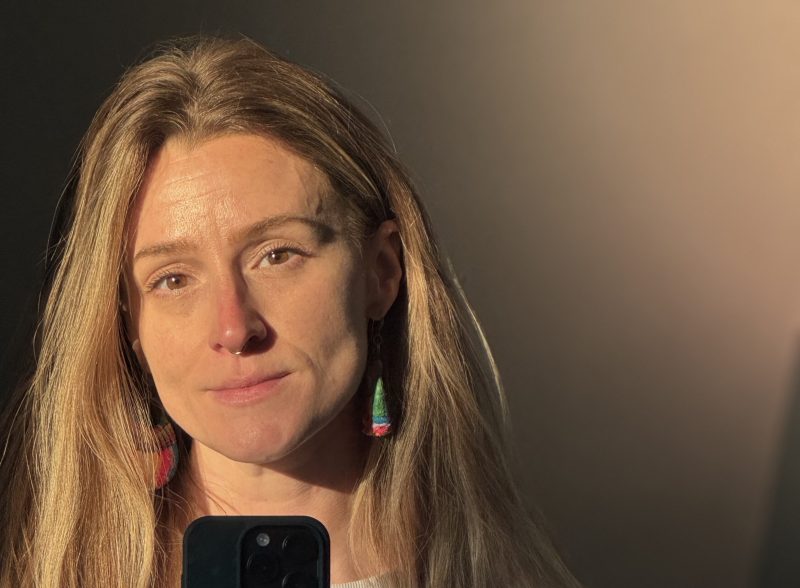
During the discussion, Romero acknowledged the area’s importance to Fire Island’s LGBTQIA+ history. Some residents expressed concern that reducing social trails could eventually lead to increased policing of historically significant gathering places. Romero explained that, as a gay man, he understands the cultural importance of the Carrington Tract and the Meat Rack. He added that the National Seashore’s focus is on accessibility, public safety, and the protection of natural resources rather than enforcement.
To illustrate possibilities, the presentation included examples of two types of pathways: a traditional boardwalk and a Mobi-Mat, a flexible accessibility surface that rests on the sand with far less permanent construction. Park officials repeatedly emphasized that these were only examples. The meeting was intended to discuss the concept of access, not the design of a future trail. Nevertheless, much of the conversation quickly shifted to concerns about what those examples might eventually become.
Many attendees worried that a boardwalk could encourage greater use by authorized utility vehicles and other permitted traffic, altering the forest’s quiet character and forcing pedestrians off the trail. Others said that, if any improvements were eventually considered, they would favor an approach that discouraged vehicle use as much as possible.
Emergency access emerged as another important topic. Members of the Cherry Grove Fire Department noted that the department is responsible for emergency response within the Carrington Tract and stressed that any future pathway should either improve emergency access or, at a minimum, not interfere with existing ATV and EMS operations.
One positive possibility discussed was accessibility. A carefully designed trail could provide seniors and people with limited mobility with easier access to the Carrington House for educational programs and public events, while also providing a safer pedestrian connection between Cherry Grove and the Pines.
Romero explained that there is currently no funding that exists for such a project. If the National Seashore determines there is sufficient public support to continue exploring the idea, the next step would likely involve the National Environmental Policy Act (NEPA) process, including environmental review, cultural resource studies, engineering evaluations, public comment, and cost estimates, before funding could be pursued.
Throughout the meeting, attendees were encouraged to submit comments via a National Park Service online portal accessed via QR code, enabling the Seashore to formally document community feedback.
Perhaps the most revealing aspect of the evening was not whether a path should exist, but how differently the National Seashore and the community approached the discussion. Park officials hoped to begin a conversation about access. Much of the audience responded to concerns about what future designs might ultimately permit. One unresolved issue that emerged was whether the National Park Service had the legal authority to restrict certain vehicles if a more durable pathway were eventually constructed. If a trail can physically accommodate utility vehicles or carts, who ultimately controls access to it?