

The terror of September 11, 2001, was a day that changed New Yorkers and Americans alike. On that sunny Tuesday morning, half of the 19 Al-Qaeda terrorists hijacked American Airlines Flight 11 and United Airlines Flight 175 from Logan Airport in Boston. Within a little more than an hour, both planes would crash into the North and South Towers of the World Trade Center. The remaining terrorists hijacked United Airlines Flight 93 from Newark Airport and American Airlines Flight 77 from Washington Dulles Airport. Flight 77 would crash into the Pentagon while Flight 93 would crash in a field in Pennsylvania.
By day’s end, the world watched as the sunny Tuesday morning gave way to a smoke-filled horizon, with 2,753 people killed, including 178 from Suffolk County. In addition, millions of New Yorkers were traumatized, and thousands of first responders would suffer from lethal illnesses caused by exposure to toxic smoke plumes in the years to come. New Yorkers would never be the same.
However, in the week that followed, the city that never sleeps was at a standstill and needed a vital lifeline to transport workers into Lower Manhattan for recovery efforts.
During the first days of the attack, residents and workers were stranded in Lower Manhattan. Staten Island Ferries, operating in low visibility, conducted one of the largest evacuations in New York City history, later known as the 9/11 Boatlift. But additional service was needed. New York City Subway lines along Broadway–Seventh Avenue (1 and 9 trains), which ran under the Trade Center, were damaged and remained suspended south of Chambers Street for over a year. Roadways and bridges had limited closures, but the Hudson River remained open.
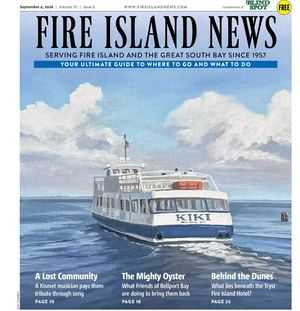
It was all hands on deck to get the city up and running, and Fire Island Ferries answered the call.
“In my almost 50 years working on the ferries, we have conducted multiple evacuations of Fire Island during hurricanes such as Belle, Gloria, and Sandy, but the events of 9/11 stand out the most,” recalled David Anderson, Director of Operations of Fire Island Ferries in Bay Shore. “It was very emotional. We were traveling through the Hudson toward lower Manhattan, and you could see a yellow haze, then a smoke-filled skyline. It smelled awful, like electricity burning. It was just very, very surreal.”
Twenty-five years later, Anderson’s impression of navigating ferries into Lower Manhattan remains vivid.
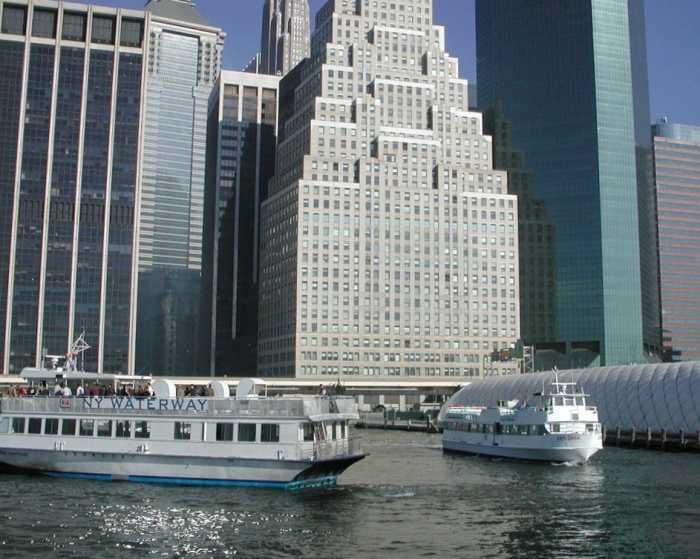
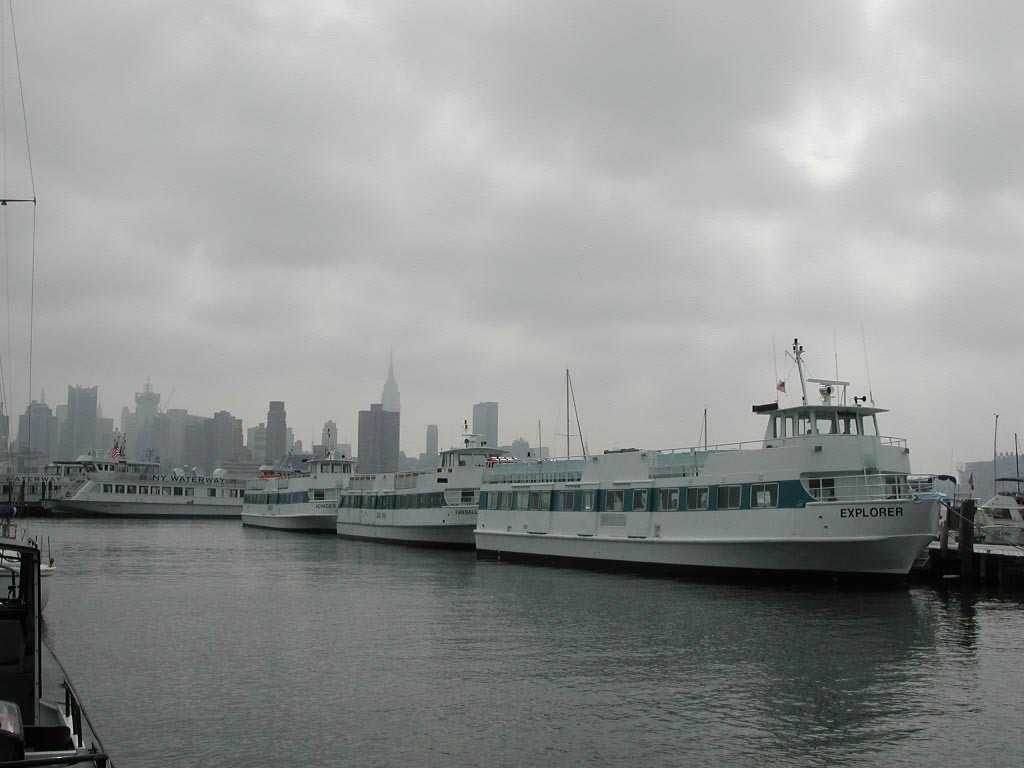
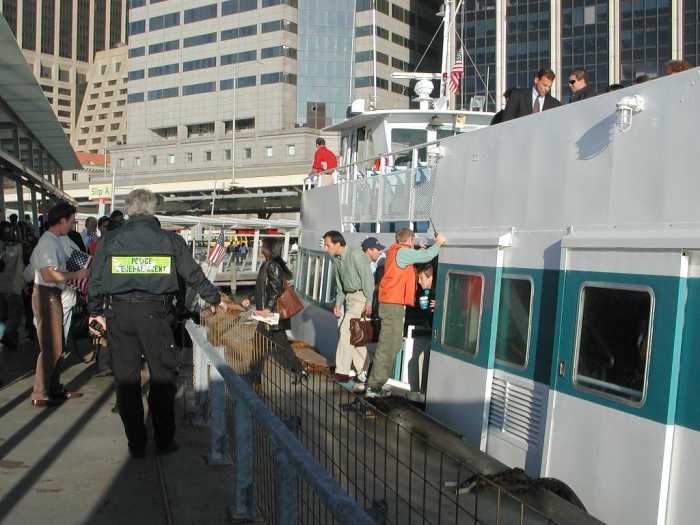
“We all heard what happened and knew the Coast Guard had New York Harbor locked down for incoming and outgoing vessels. So, we were pretty much sitting on our hands, wanting to help but unable to do anything. Later that week, we got a phone call from New York Waterway asking if we were interested in coordinating efforts to restore service to downtown Manhattan. On September 17, a Monday, we sent three of our ferries into Manhattan. We began restoring service to lower Manhattan by running ferries from Weehawken and Fort Liberty, New Jersey, to Pier 11 and Pier A in lower Manhattan. We were actually the first ferry into lower Manhattan to start providing service again.”
“Many of the passengers were firefighters and EMS personnel sent down there to conduct search-and-rescue operations or retrieve bodies from the rubble. No one talked much; it was very sobering. In the weeks to come, workers began returning to their offices, and we pulled two of our boats out around Thanksgiving. But all the way up to January, the passengers remained quiet, as if they were waiting for the next show to drop.”
In the coming year, New York City slowly returned to its recognizable self, though it was different. New Yorkers did what they do best—build back bigger and stronger. From the rubble of the original 1368-foot-tall towers rose the 1776-foot-tall Freedom Tower, a testament to New York’s collective resilience, and life went on. However, the devastation from those days will never be forgotten.