Sixty-four units on a 12.8-acre parcel for a 55-and-older rental retirement development in East Patchogue are projected to start construction, possibly in early 2027, according to Kelly Builders & Development LLC president Mike Kelly.
The Town of Brookhaven gave the $32 million project a change of zoning and site plan approval in a 7-0 vote on December 11, during a lively public hearing that included nearby area residents.
“The development is south of the Sunrise Highway Service Road and west of single-family homes on Hewlett Avenue. Ingress and egress are located on the Sunrise Highway South Service Road,” Kelly said. “Long Island Animal Surgery is to our immediate west, and St. Joseph’s University ball fields are east past Hewlett Avenue.”
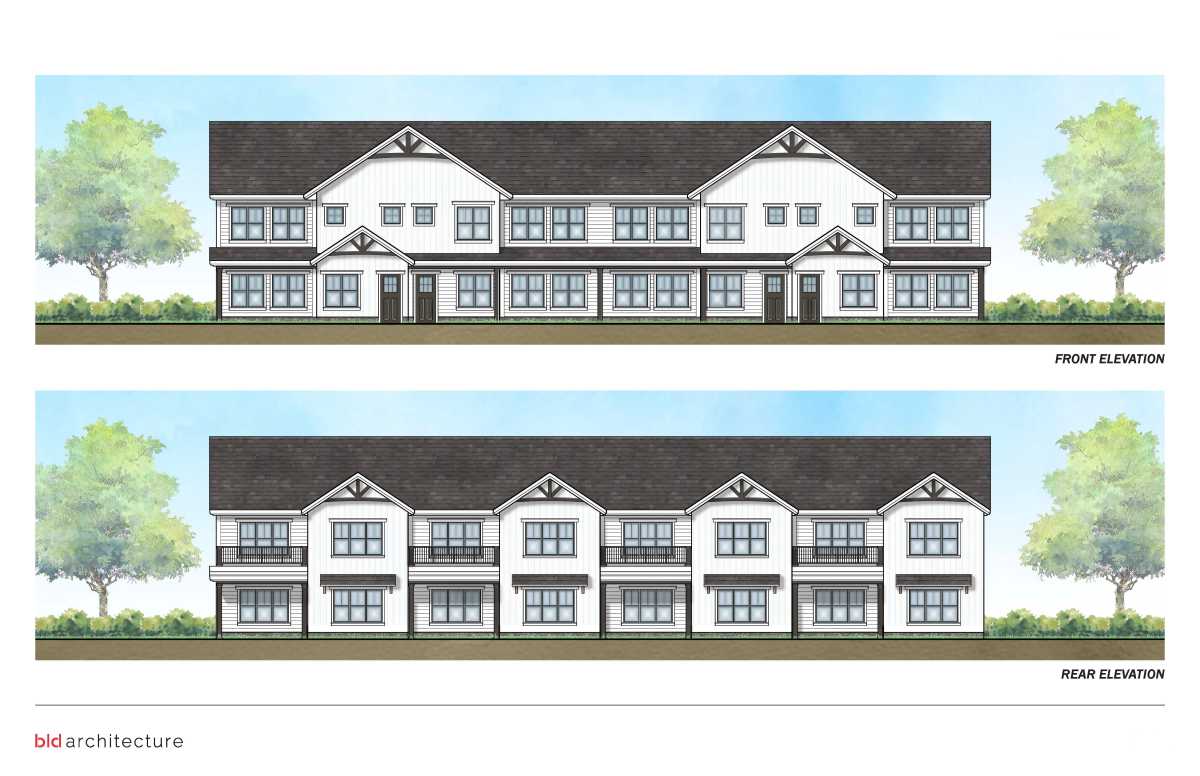
The development will include 40 ranch-style 1,300-square-foot units, each with two bedrooms, two bathrooms, and a one-car garage, as well as 24 flats of about 1,200 square feet, with two bedrooms and two bathrooms.
A 2,200-square-foot clubhouse with a pool, bocce, and pickleball courts is planned, and an on-site wastewater facility will be constructed.
Half of the seven units have been set aside for workforce housing or affordable housing for people 55 and older; the other half for people with intellectual disabilities.
Kelly was asked about the rents. “It depends on the market rate,” he said. “But they might be between $2,800 to $2,900, to $3,400 to $3,500.”
Deputy Supervisor and Councilman Neil Foley was asked what the town considers before approving developments. He pointed to the town’s commitment to purchasing open space.
“We search for properties every day, and we score them,” he said. “Over the years, we tried to purchase this parcel, but the owner wasn’t in agreement with the proposed assessment.
Foley added that he’d met with constituents several times.
“I think the important thing to note is that it’s private property,” he said. “It was zoned A1 Residential, so the owner had a right to build 30 single-family homes. If it stayed as a single-family development, there would be no buffers on the east side. With this Planned Retirement Community (PRC), there’s open space that backs up to the residential homes. The developer agreed to that, and that’s how we leaned towards the zone change. So, the neighbors have a large buffer. It doesn’t affect the school district, so there are no buses, and the units weren’t a lot… With land use, it’s not easy. But with the buffers, we felt it was the right move to make.”
In a FIN interview, Kelly was asked why rentals were chosen over single-family homes.
“From a financing standpoint, lenders view rental communities more favorably as there is less market risk, and when you commit to a condo community, the New York State Attorney General requires submitting a comprehensive plan that could take an additional nine months for approvals.”
“With a PRC, retirees are selling their homes for much more than they purchased them initially,” he explained. “So, they can invest a good part of their capital gains (after paying off a mortgage or improvements) and still pay the rent without a hardship. They have no taxes, utilities, or maintenance costs, such as landscaping. Plus, they can be more mobile to travel.”
“With single-family homes, you have all these costs, condos also have HOA fees, and depending on how large your family is, you can have three or four cars traveling back and forth out of the driveway at various times of the day, increasing traffic. It’s also a senior community, so there aren’t a lot of vehicles.”
He said the project would create about 250 construction jobs.
In a meeting Foley set up with neighbors, Kelly said one of their concerns was a paper street that led to Hewlett. “So, part of the dialogue we agreed to was abandoning that road—that was a big thing,” he said.
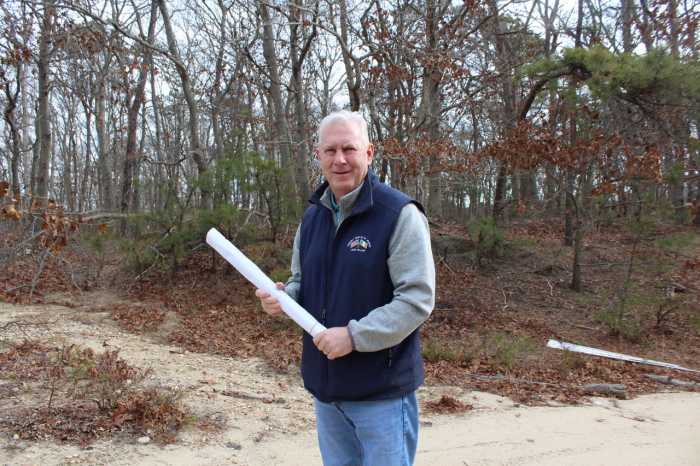
Adding the buffer was another concession. At the actual site with GSBN, Kelly stood on approximately one-third of the property, or about four acres, to remain wooded.
Matthew Nelson, who lives on Hewlett Avenue, collected over 70 signatures and presented them at the packed town board meeting, which lasted until 10 p.m. and included supporters, including Patchogue Mayor Paul Pontieri, as well as dissenters.
“My wife and I agreed the buffer was a good consolation prize,” he said.
Nelson works in commercial real estate. He said he wasn’t anti-apartments or anti-development.
“Mike Kelly has done beautiful work and actually benefitted the environment, especially with Copper Beach (Pulte Homes), and Riverwalk in Patchogue. Our issue is population density. If we can’t fix the density issue, perhaps we can address the traffic issue. We’re concerned about Hewlett Avenue. Between 3:30 and 7 p.m., drivers speed down the block from Sunrise to Montauk Highway.”
Nelson countered Kelly’s comments about renters not paying taxes. “You’re paying taxes through the monthly rent,” he said. “It’s not about charity. This is why a lot of developers build rentals.”
The application might have gone more easily, he said, if “Kelly approached us first with options on the table (like the paper street and the buffer). This is my first time getting involved with a neighborhood issue. But I felt I had to.”
Kelly said architectural plans have yet to be presented, and building permits need approval. He’s willing to meet with residents about additional concerns. “I’m an open book,” he said.