

A company founded by a Princeton University PhD has received a grant to test a new system to fortify Fire Island’s soil and sand dunes, taking a fresh approach to combating accelerating coastal erosion. The National Science Foundation (NSF) awarded a $305,000 Small Business Innovation Research grant to Foogly Corp. to use local food and solid waste to help prevent erosion of Fire Island dunes.
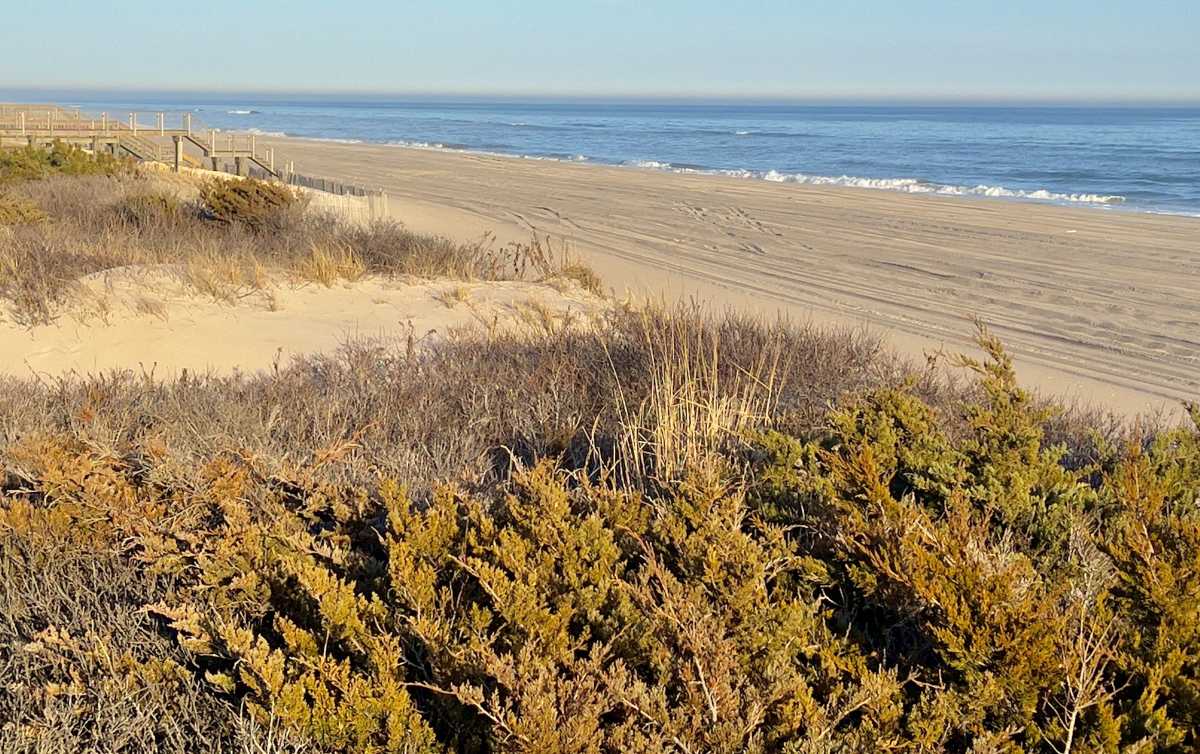
Fire Island—and the world—are facing accelerating coastal erosion, soil deterioration, nutrient loss, and soil acidification.
“Increasing storm surge from nor’easters and rising sea levels are increasing coastal erosion,” said Kevin Speina, a Brooklyn resident and CEO of Foogly Corp., which he started in 2022 while a Princeton PhD student.
Traditional measures to fortify the dunes on Fire Island and Long Island include adding sand and using barriers to reduce wave impact.
“It is a Band-Aid,” he said of those approaches. “It doesn’t address ecological damage done while doing sand dredging.”
Speina describes sand taken from the ocean destroys the ecosystem, calling it “ecocide.” Suffolk County Executive Ed Romaine and New Jersey Senator Cory Booker both wrote letters of support. Romaine, in a letter to the NSF, wrote: “Foogly offers an opportunity to address two major environmental challenges that affect many municipalities in Suffolk County and across Long Island: coastal erosion and the need for sustainable, cost-effective soil amendments to improve local soil health and local farmers’ well-being.” The County Executive went on to say that without relying on mined minerals, Foogly might be able to “help replenish damaged dunes, fortify vulnerable shorelines, and support long-term ecosystem recovery.”
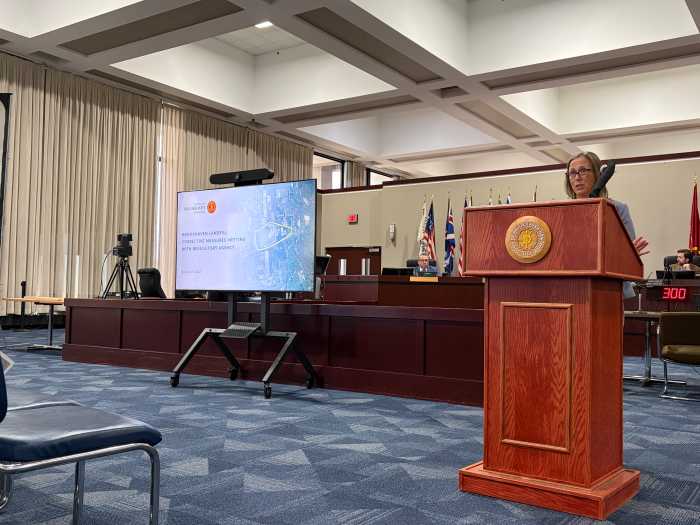
Speina presented information to the Fire Island National Seashore (FINS), the government entity responsible for maintaining shoreline health up to 100 feet offshore, noting that a significant portion of the recently replenished beach had eroded between March and September 2025.
“From drone photography and slides, you could see it was eroding rapidly,” he said.
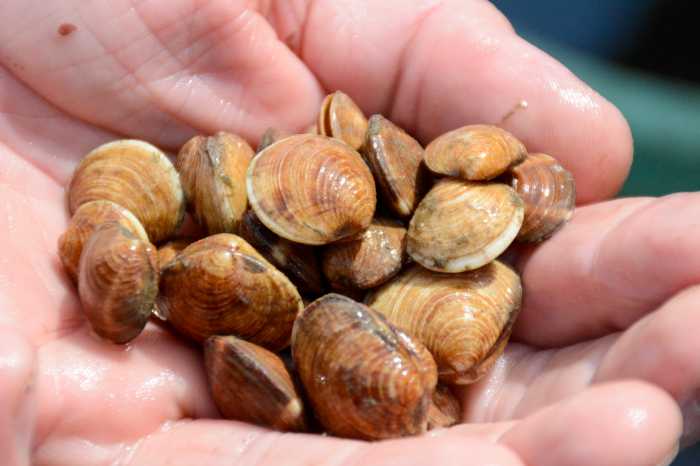
Foogly Corp. uses upcycled solid waste—such as glass, seashells, and biomass, including wood and grass clippings—to produce fertilizer and improve soil health.
“Fertilizer in general uses mined ores,” Speina added. “That’s very expensive and environmentally damaging. There are lots of greenhouse gas emissions in the process.”
His company has used its materials at Tuckahoe Turf Farms in Hammonton, New Jersey, and in seed growth experiments.
“We found that it’s a superior fertilizer for grasses,” Speina said. “I’ve also done this on Fire Island at private properties.”
The company plans to use the product on about 50 properties on Fire Island, in collaboration with the Pines Conservation Society.

“It’s an amendment that adds nutrients to the soil,” he said. “The idea is it will make the roots of plants on the dunes stronger.”
Speina plans to plant native species such as milkweed, pitch pine, beach plum, and sea pea.
“Sea peas are native plants able to grow quickly in Fire Island soils,” he said. “You strengthen the root systems, which naturally compact the soil.”
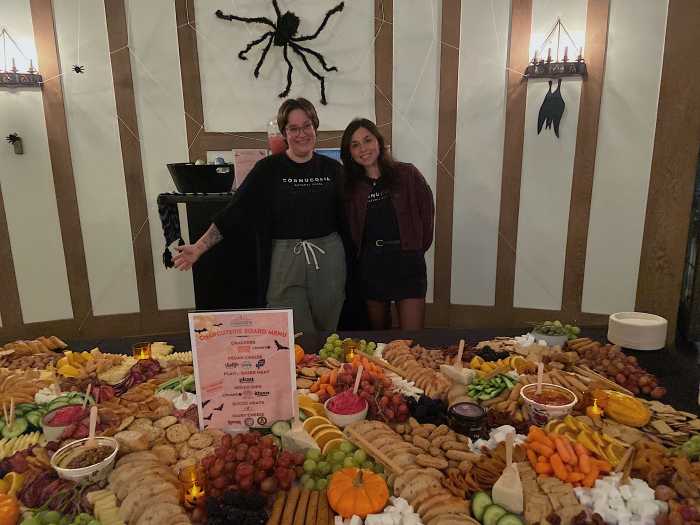
The company has produced several hundred pounds of material, obtaining shells from the corporate grant sponsor, Greenpoint Fish & Lobster Co. in Brooklyn; pumpkins from a New Jersey farm and from individuals; and biomass from discarded Christmas trees. He is also planning growth and seed germination experiments with native plants from Fire Island at Eisenhower Park greenhouses and hopes to receive a research and development permit from the New York State Department of Environmental Conservation.
“This would let us test it on the dunes,” he said. “We would use it on dunes eroded over the winter.”
The company plans to monitor costs, enhance plant growth, and reduce greenhouse gas emissions through solid waste processing. It would then seek a $1.25 million NSF Phase II grant to commercialize its products, with Greenpoint Fish & Lobster Co. as the manufacturing site.
“With those funds, we can scale up the manufacturing by hiring more people,” Speina said.
The company hopes to establish municipal contacts, apply for a patent, and expand into another municipality.
“Fire Island gave me the least amount of barriers,” he said. “That’s where my sponsorship came from, where I’m getting glass and landscape waste for free.”
Other companies are using similar creative approaches to bolster sand dunes and wetlands, such as Louisiana-based glass recycling company Glass Half Full, which uses recycled glass to restore wetlands and strengthen dunes.
“From coastal restoration and disaster relief to flooring and new glass products, we work to creatively integrate our recycled materials into everyday life,” the company says on its website.
Foogly also hopes to use invasive species, such as bamboo, to replenish sand dunes and fortify soil health. Speina hopes farmers can reduce “inflationary burdens by using a cheaper fertilizer” and towns will “adopt a rigorous recycling service to take locally sourced waste and use it to replenish sand dunes, improve soil and plant health at coastlines.” If the process proves to be affordable and effective, it could help change how we manage our coastlines and dunes toward a more sustainable approach.
“Certain types of solid waste materials like invasive species, such as bamboo, glass waste from restaurants and commercial establishments, could be used to quickly, efficiently, and effectively replenish sand dunes,” Speina said. “They could improve seagrass health and root systems to stop current and future erosions.”