Seatuck Environmental Association started the New Year off with a bang when they announced they will be taking over a portion of the former Blue Point Oyster Company building. The association took to social media to share the big news: they have acquired a key property to further their goal of environmental and marine life conservation on Long Island.
“Our goal is to establish a dynamic hub for collaborative, innovative, and impactful conservation leadership across the South Shore Estuary and throughout the region,” Seatuck stated in their announcement. “Over the coming months, we’ll be converting the iconic location into a working restoration-focused hatchery and wet lab.”
The hatchery is scheduled to open in the spring of 2026, but a firm date has not yet been announced. The aquatic species they plan to hatch, and the other work to be done there, are still not fully confirmed.
“We’re not taking over the lease until March,” a Seatuck representative told the Great South Bay News. “We’re still very much in the planning phase.”
The busy nonprofit 501(c)(3) organization did not furnish additional information on the matter as they continue to craft this large plan. However, thanks to a job listing Seatuck posted seeking a Hatchery Technician for the site, we know shellfish will be a major factor in the work there. Oysters and clams are the likely choice, as they remain the top natural options for restoring and filtering marine waters. Increasing their presence in our local waterways supports Seatuck’s conservation efforts by improving habitats for much of the marine life they aim to protect and preserve. Horseshoe crabs, diamondback terrapins, and spotted turtles are just a few examples. It will also benefit locals, as improved water quality will support recreational and economic marine activities.
The job listing also indicates that algae growth will be performed in the wet lab, stating “the position is a hands-on technical role focused on daily hatchery operations, shellfish culture, algae production, data collection, and field support.”
Algae are another important component of the ecosystem, with many different purposes and types. Some provide food for animals, while others also help clean and filter water. In fact, algae are estimated to have produced at least half of all the oxygen on Earth through photosynthesis, according to the Ocean Conservancy. Additionally, brown algae are estimated to remove more than 500 million tons of carbon dioxide (CO2) annually.
It will be very interesting to see what type of algae the new lab chooses to work with, especially if it’s sea kelp. Another local conservation company, Save the Great South Bay, has discussed the potential farming of cold-water sea kelp here on Long Island, for both nitrogen removal and the benefits it provides for faster oyster growth. If Seatuck dabbles in the kelp route, it could be huge.
Still, another direction could be finding alternative bait in lieu of horseshoe crabs. The Horseshoe Crab Protection Act, a bill Gov. Hochul’s recently signed into law at the end of last year, has a tiered sunset date on the harvesting of horseshoe crabs in New York State waters in 2029. Now, organizations like Cornell Cooperative Extension of Suffolk County have their marine programs testing alternative options for fishermen to use in their place. Seatuck was one of the major champions of the Horseshoe Crab Protection Act, so they may be planning to conduct their own research.
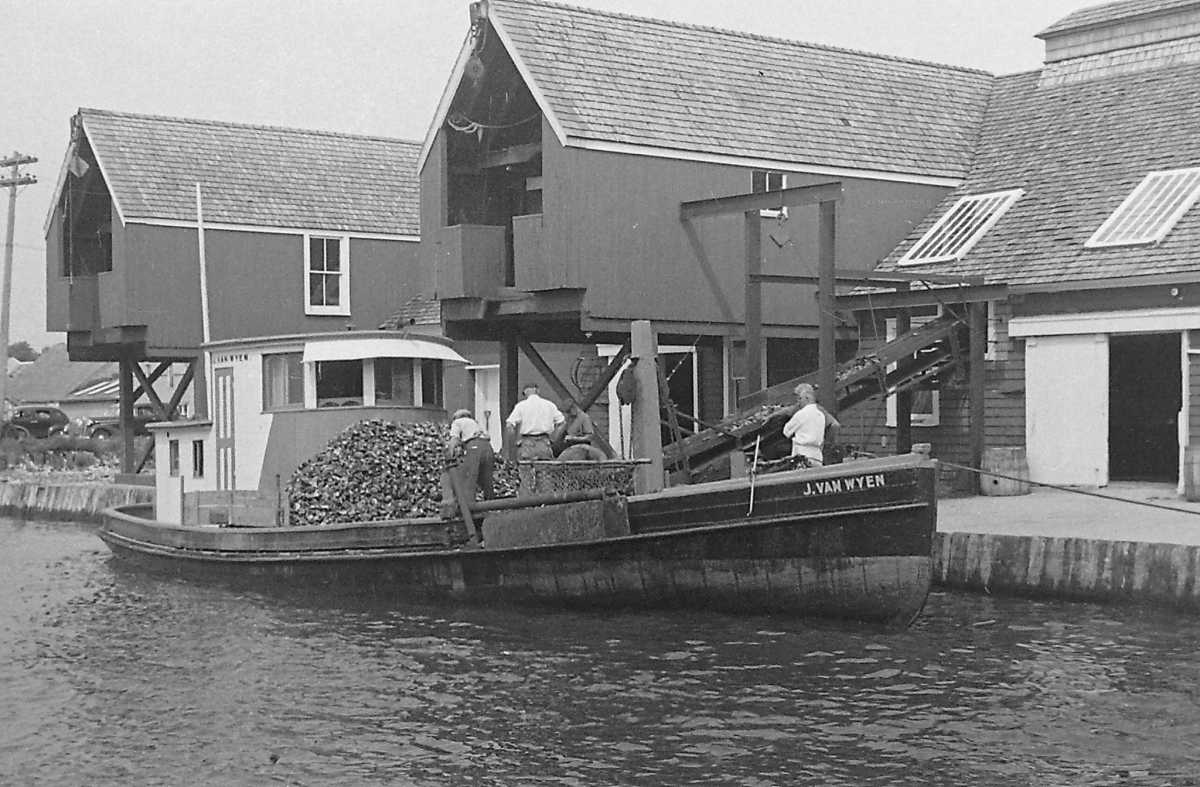
As far as location goes, it doesn’t get much better than the West Sayville Boat Basin, a storied shellfish-farming site. In the late 1800s, Oakdale baymen relocated there and purchased land to establish the basin. It was a prime location for access to the bay and its shellfish beds, it even played a role in American history, serving as a naval base during World War I. After decades of shell fishing, the property was purchased by the DeAngelis family in 1995 and developed into the facility it is now. After the decline of clams and oysters on Long Island, the former hub became a marina, and the buildings were preserved.
It will now return to its roots as a shellfish location, and we look forward to seeing how this new chapter unfolds.