


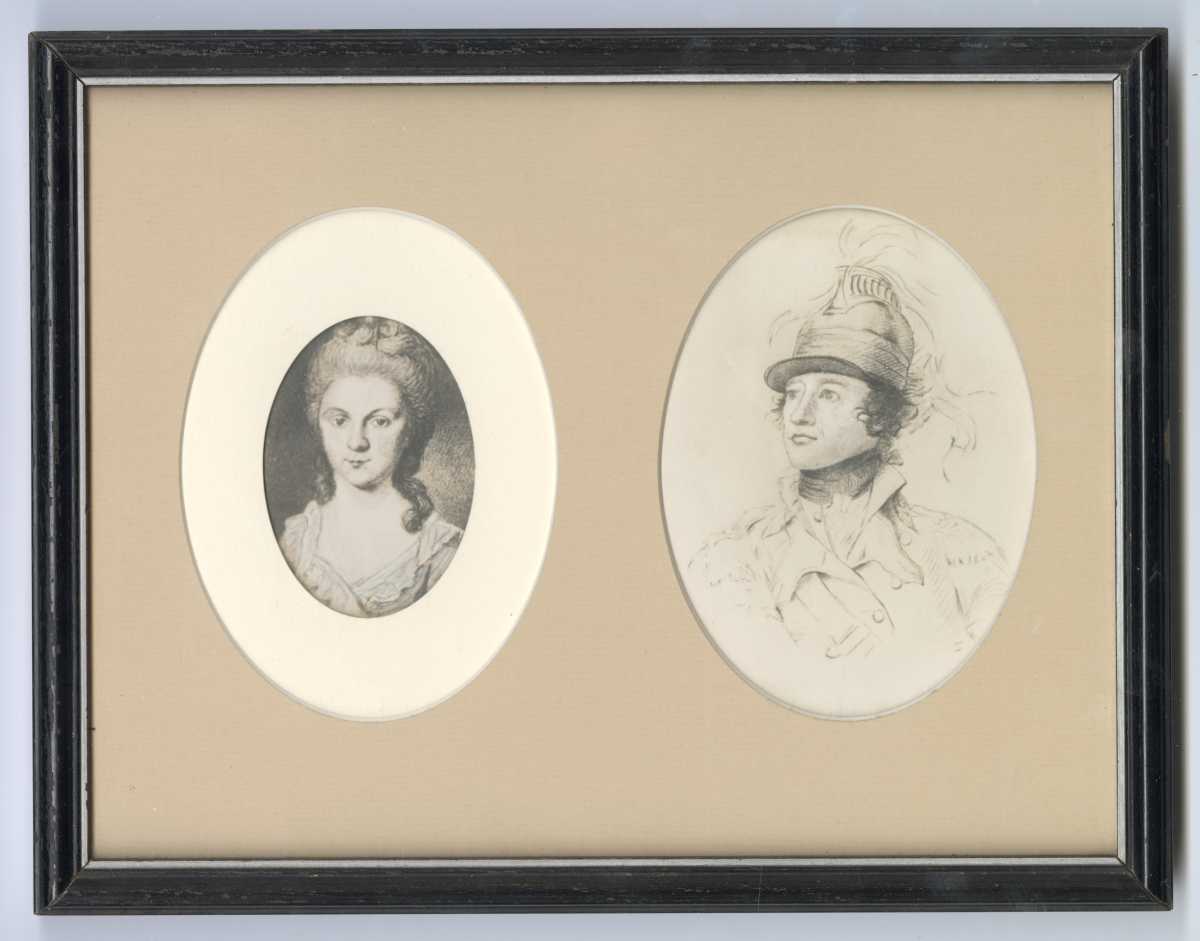
The love story between Mary Floyd and Benjamin Tallmadge is an American love story. From the ashes of the British North American Empire, a new nation was built on rebellion and individualism. Filled with uncertainty, this experimental republic would either become the envy of the world or a massive societal failure. Amidst the doubt, Benjamin Tallmadge wasn’t sure what tomorrow held, but he knew he loved Mary Floyd. On March 18, 1784, he stood before an altar overseen by his father, Reverend Benjamin Tallmadge Sr., to pledge his vows of marriage to Mary Floyd, trusting that better days lay ahead.
Eight years earlier, Tallmadge, like Mary Floyd’s father William, mounted a strong resistance to the British. But unlike Floyd’s political leadership, Tallmadge developed an innovative intelligence network, the Culper Spy Ring, which would have meant certain death for any agent caught by the British. Despite both families’ dedication to the revolution, Tallmadge would face competition for his true love, Mary Floyd.
Before the first shots of the American Revolution, the center of the Brookhaven community was the Setauket Presbyterian Church—the current church was built in 1812 after the original burned down—where Reverend Benjamin Tallmadge Sr. built a devoted congregation that included the wealthy Mastic landowning family, the Floyds. (Floyd and his wife, Hannah, had three children: Nicoll, Mary, and Catherine “Kitty.”)
As Enlightenment ideals of self-governance spread throughout New York, Floyd fully supported the patriot cause. Floyd was selected to represent New York at the First Continental Congress in 1774 and took part in the Second Continental Congress in 1775. By 1776, Floyd was one of four New Yorkers who signed the Declaration of Independence—and the only one from Suffolk County.
The signers understood that England viewed this declaration as treason. Reflecting on the threat to the signers and the importance of staying united, Benjamin Franklin said, “We must all hang together, or most assuredly we shall all hang separately.”
Suffolk County, following the devastating defeat of Washington’s forces at the Battle of Long Island in late August 1776—commonly known as the Battle of Brooklyn Heights—remained under British occupation throughout the war. Floyd escaped the British hangman’s noose by fleeing with his family to live as fugitives in Connecticut.
While exiled in Connecticut, the Floyd family surrounded themselves with other leaders of revolutionary society. His daughters met Thomas Jefferson and James Madison at this time. Courted by Madison, Kitty became engaged near the end of the war, but shortly after, broke off the engagement for her new love interest, Dr. William Clarkson of Philadelphia.
During this period, Tallmadge, a major in Washington’s army, saw firsthand the destruction caused by the British military campaigns. In his memoir, Tallmadge wrote,
“This was a period of great dismay. The campaign of 1776 was now drawing to a close. The enemy, victorious and flushed with success, were insolent and cruel both to the inhabitants and to their prisoners. In fact, all was confusion and dismay, seemed as if we were on the eve of despair and ruin.”
Based in Connecticut, Tallmadge used his connections throughout Setauket and nearby communities to establish spy networks that linked most of Long Island. Tallmadge explained the spy ring’s effectiveness, citing in his memoir: “Having constant and repeated intelligence from New York and all parts of Long Island, I began to entertain the plan of breaking up the whole system [The British Occupation of New York].”
After the war, Tallmadge returned to Setauket, where the community greeted him with an ox roast on the village green. But Tallmadge was overwhelmed by the destruction left by the occupation and the impacts of the war.
Finding solace and reconnecting with Mary Floyd, the two soon found themselves standing together, exchanging vows. After the wedding, they made plans to start a new future together away from Long Island.
“Indeed, I had not made it my place of residence [Long Island] since I entered college, and as for my beloved partner, she had never seen her father’s house since the family left when the British troops took possession of it and New York,” wrote Tallmadge, reflecting on the disconnect he and his new bride now had with their hometowns.
After the wedding and catching up with other families who had returned from wartime exile, the couple returned to Mastic for a farewell visit before beginning their new life together in Litchfield, Connecticut. Then they put their Long Island life in the rearview mirror, never turning back.