

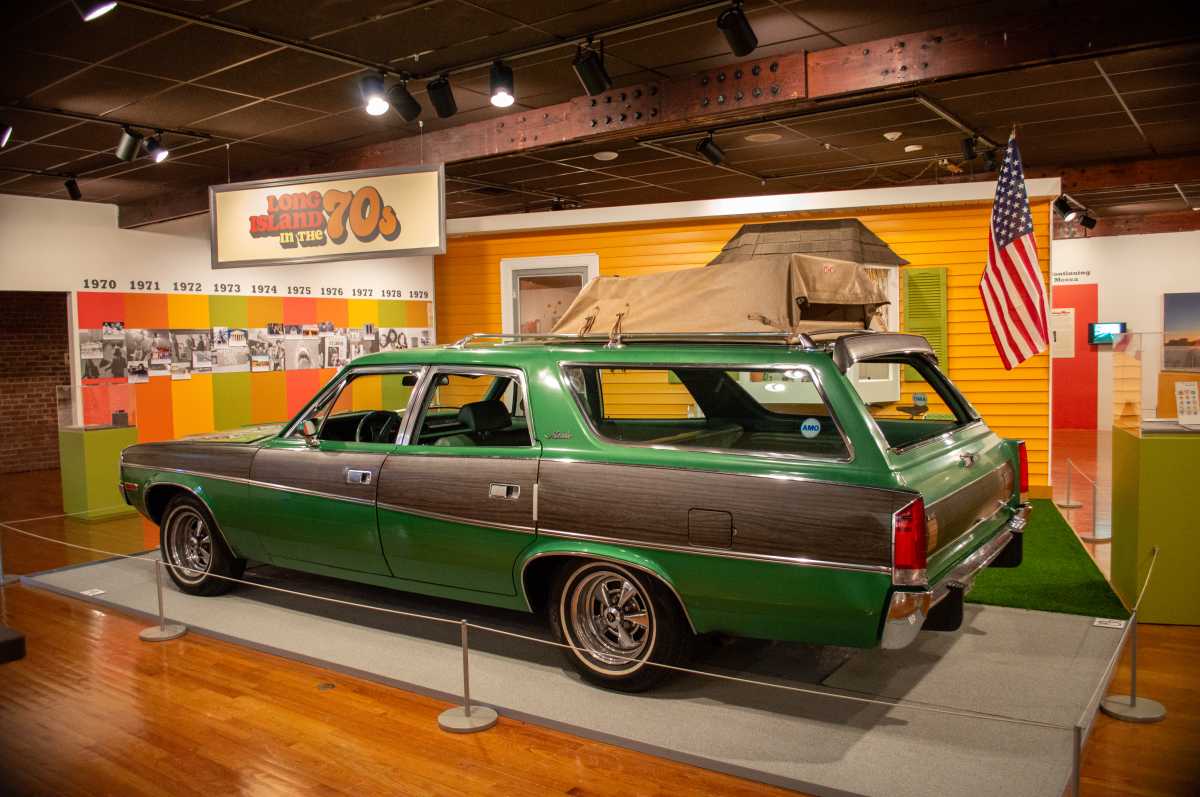
Long Island Museum (LIM) in Stony Brook is featuring a new exhibit, Long Island in the 70’s, that revisits suburban life during the 1970s. One of the exhibit’s many features is its exploration of how the South Shore was shaped environmentally, politically, and socially. At the center of the exhibit’s retelling of the social changes is Bay Shore resident Frank Romeo, who shared his homecoming experience after his deployment in Vietnam.
The 1970s on Long Island marked a shift from the optimism of first-generation homeowners to the realization that the land of possibilities was an island with limitations.
By 1970, Suffolk County’s population had swelled to 1,127,030 and 31% of Long Island’s wetlands had been paved over. On the North Shore, more than 1 billion gallons of sewage were dumped into Long Island Sound daily by public works in New York City, Long Island, and Connecticut. Locally, at the once-beloved South Shore beaches, swimmers are plagued by skin infections caused by intestinal bacteria from the overflowing residential septic tanks.
Amid the decade’s environmental crises, activism that emerged in the late ’60s took root in the ’70s. Art Cooley, a Bellport High School teacher, and Victor Yannacone, a Patchogue lawyer, helped create the Environmental Defense Fund and successfully secured a nationwide ban on the cancer-causing pesticide DDT. In the wake of this successful campaign, Suffolk County would be the first in the country to create the Environmental Bill of Rights, evaluating the environmental sensitivity of land before development. Other environmental innovations pioneered by Suffolk in the ’70s, and later replicated throughout the country, included the purchase of development rights from its rapidly disappearing farms.
“Long Island was a bellwether for many places; it was a place that faced the challenges associated with the lack of planning during the growth of the suburbs. It was a more difficult time to achieve the American Dream and politically complicated on a national level, which played out locally,” said Joshua Ruff, Co-Executive Director of the Long Island History Museum.
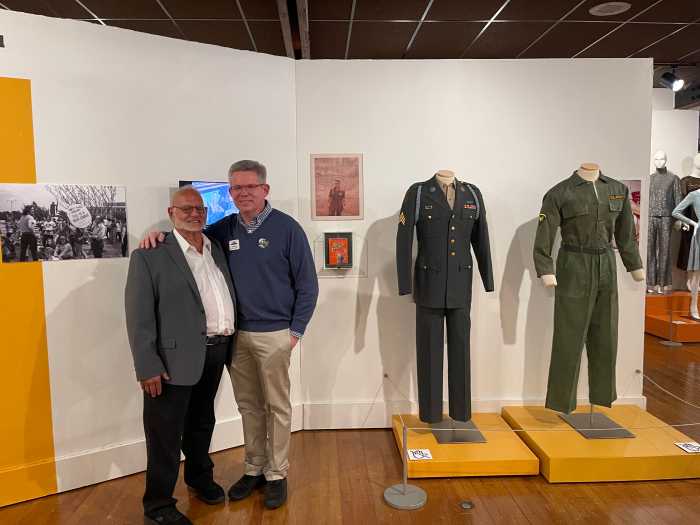
Socially, the United States and Long Island were navigating a crisis of confidence fueled by an erosion of trust in government following the Vietnam War and the aftereffects of social movements that emerged during the last decade. Returning veterans bore the brunt of the declining trust in the government and backlash over the Vietnam War, often returning to hometown communities that experienced drastic changes.
“The 1970s were a scary time; if we did not go to college, we were drafted. About 10% of my graduating class in Bay Shore was drafted. Coming back from the war, we were not welcome home, and we could not assimilate well. We [other veterans] stuck together,” Vietnam Veteran Frank Romeo said. “It felt like we were lost in the 70s. Before I left for Vietnam, it felt Long Islandish; everyone knew each other. When I came home, there was a big divide between people who went to college, draft dodgers, and veterans. This division was along political and social lines, very fractional, almost like today.”
Despite the turbulence of the 70s, it did not break us but affirmed our identity as Long Islanders. Pioneering fields of realist art, such as the work of painter Howard Kanovitz, and music that ranged from Led Zeppelin to the Disco greats, including the Bee Gees, became central to our collective identity.
“The exhibit is designed to be a slice of life for people who were there. We wanted them to see the complexity of history, but wanted them to see the excitement of what was happening, such as the arrival of professional sports through the construction of Nassau Coliseum, which helped create a separate identity from the five boroughs, which we tried to pack into 3000 square feet, and understand the bigger story,” Ruff explained.
“Long Island in the 70’s” remains on view at The Long Island Museum through Oct. 18. Hours are Thursday from 11:30 a.m.-7 p.m., and Friday through Sunday from noon to 5 p.m. For additional information, visit www.longislandmuseum.org.